



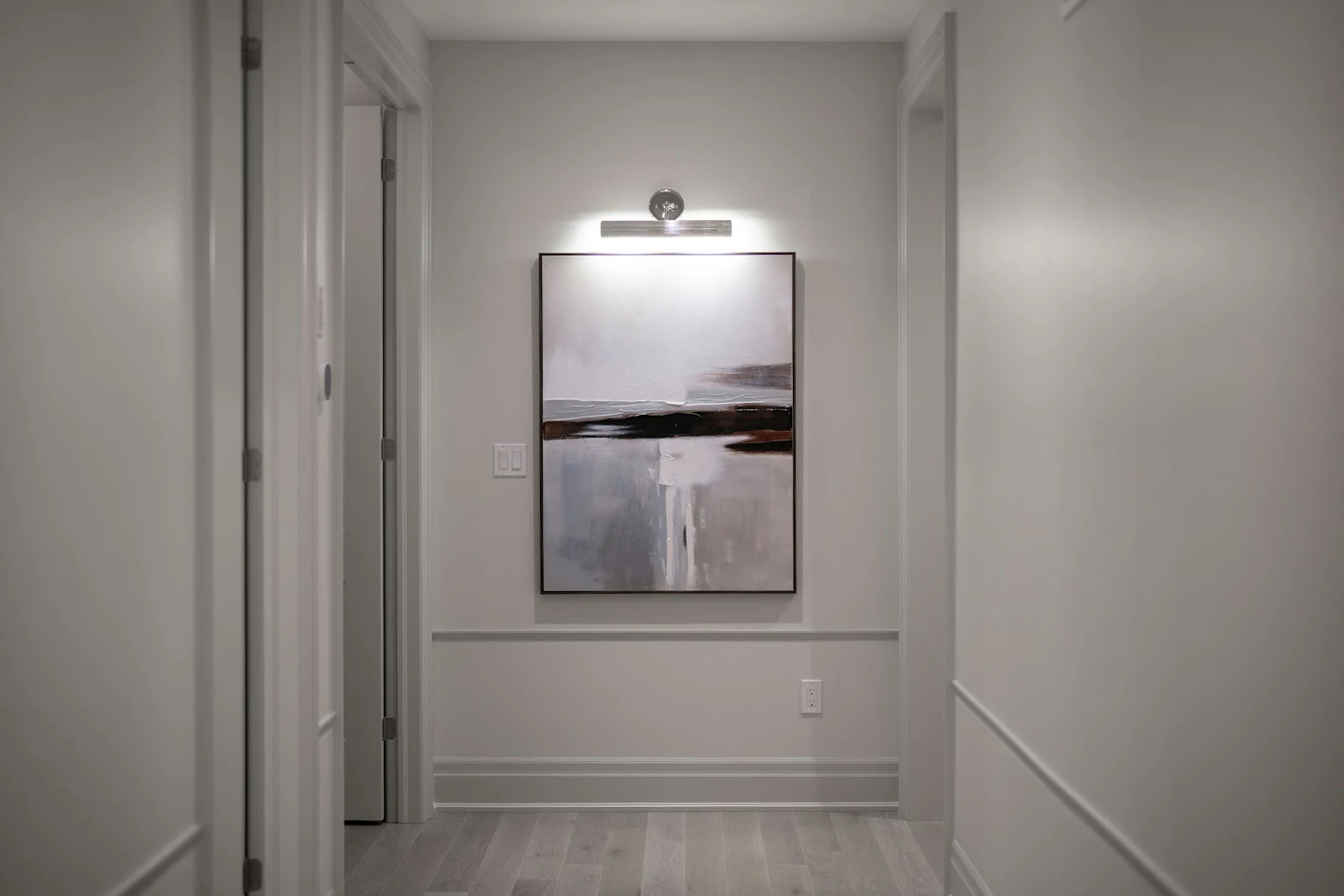
Quick Answer
Treat a hallway as a route first. Open every door fully, keep the walking line clear, then decide whether the corridor can support storage, a runner, art or a mirror. In a narrow hallway, no console at all can be better than forcing one into the plan. In a dark hallway, improve useful light before relying on bright paint or reflective decor to compensate.
This page covers interior corridors and passages. For front-door arrival and storage, see the Feng Shui entryway guide. The Feng Shui floor-plan guide covers circulation at whole-home scale.
Start with every door open
A hallway often looks wider when all doors are closed. That is not how it functions. Bedroom, bathroom, closet and utility doors can overlap the corridor, and a console or basket that seemed harmless may become an obstacle as soon as a door opens.
Draw the hall as a simple rectangle, then add full door arcs. Mark radiators, vents, switches and anything that cannot move. Only then add storage.
An uncluttered floor does not have to look unfinished. Matching door finishes, restrained wall color and a ceiling light can give a small passage enough character without adding furniture.
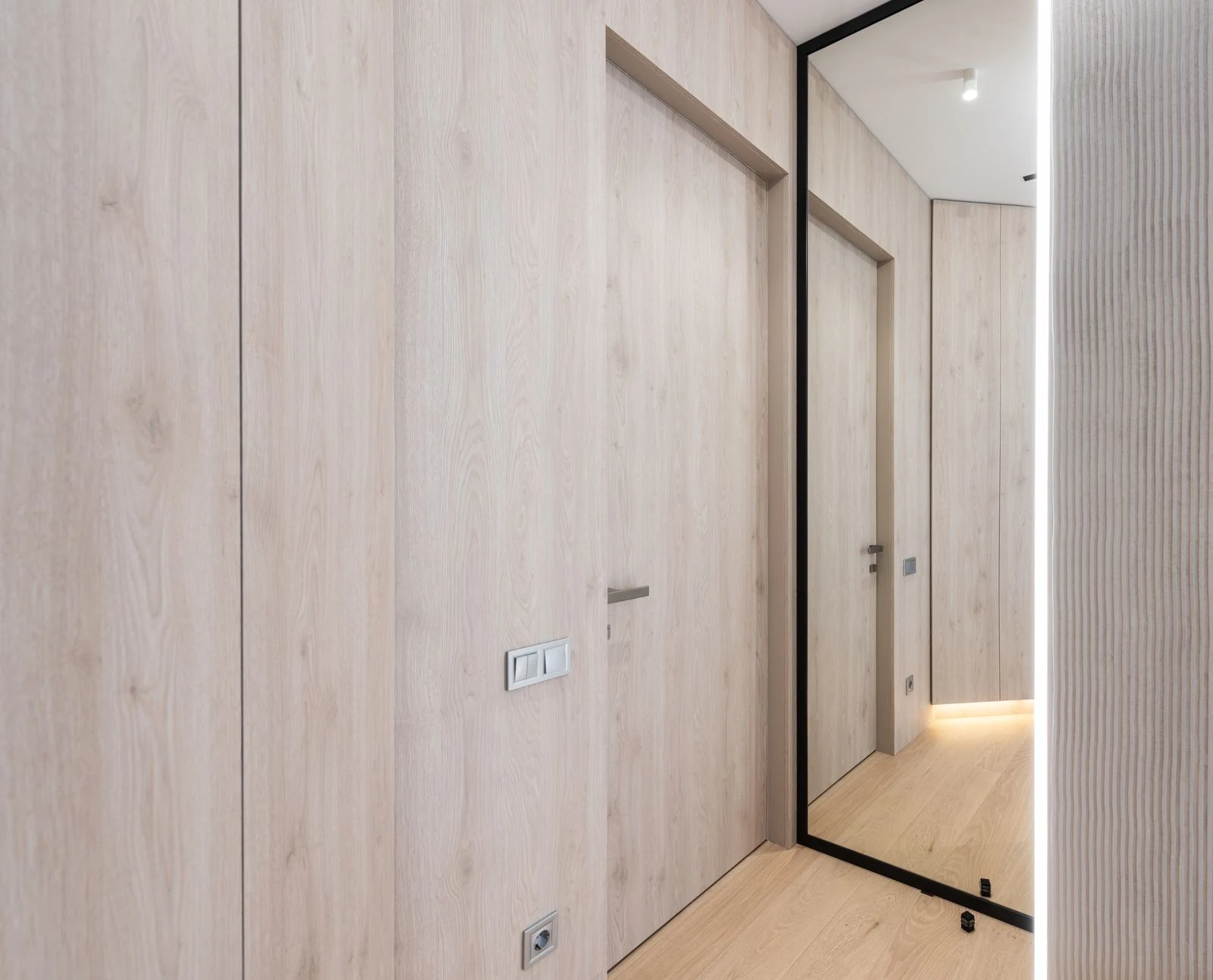
The CDC fall-prevention checklist recommends good lighting in hallways and keeping floors free of trip hazards in fall-prevention guidance. Those practical checks are relevant regardless of whether you describe the corridor through Feng Shui language about qi flow.
Work through a long narrow hallway as a floor plan
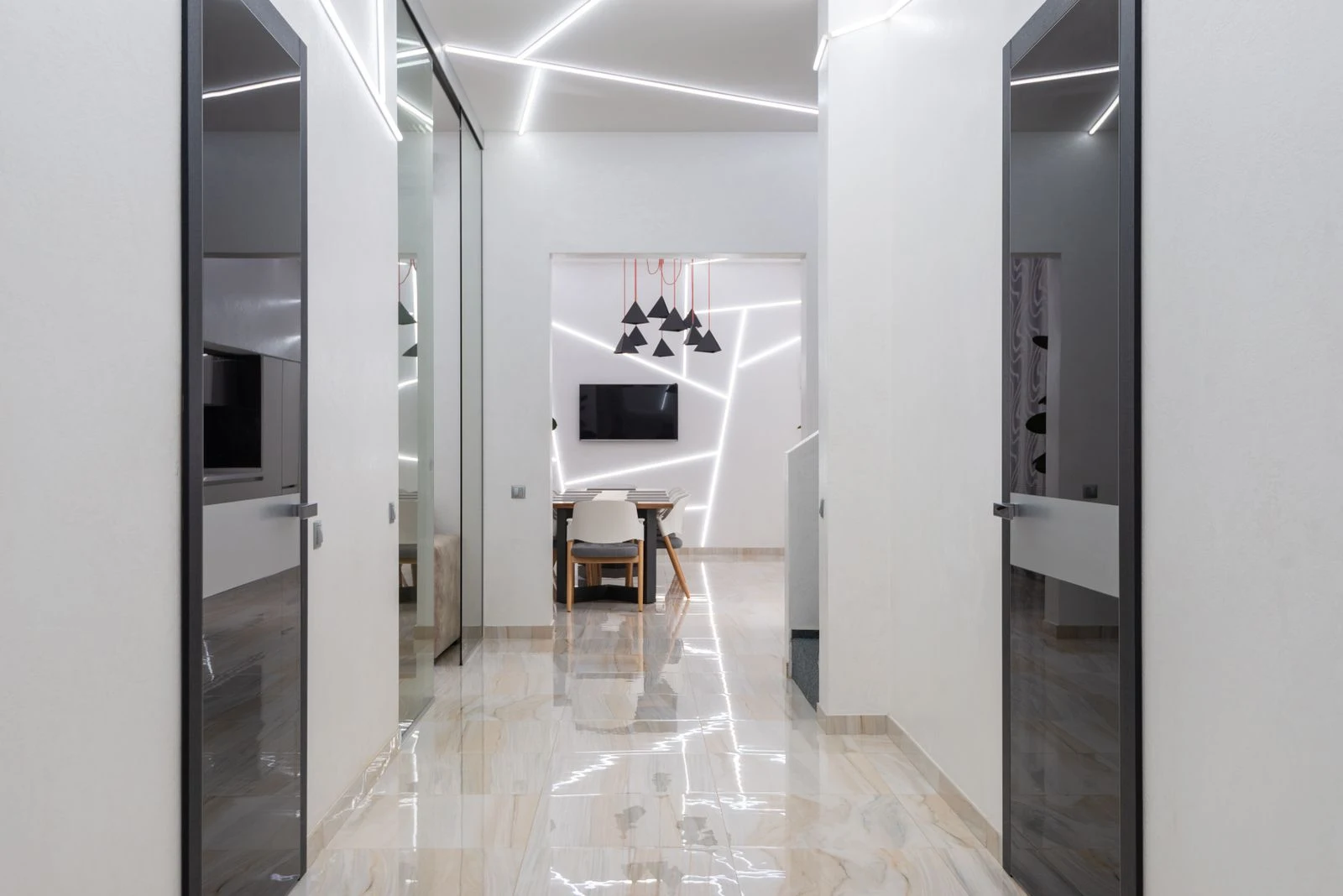
A long corridor can feel fast or tunnel-like because the eye sees the destination immediately. Feng Shui traditions often describe this as qi moving too quickly. The functional response is to make the passage legible without filling it with obstacles.
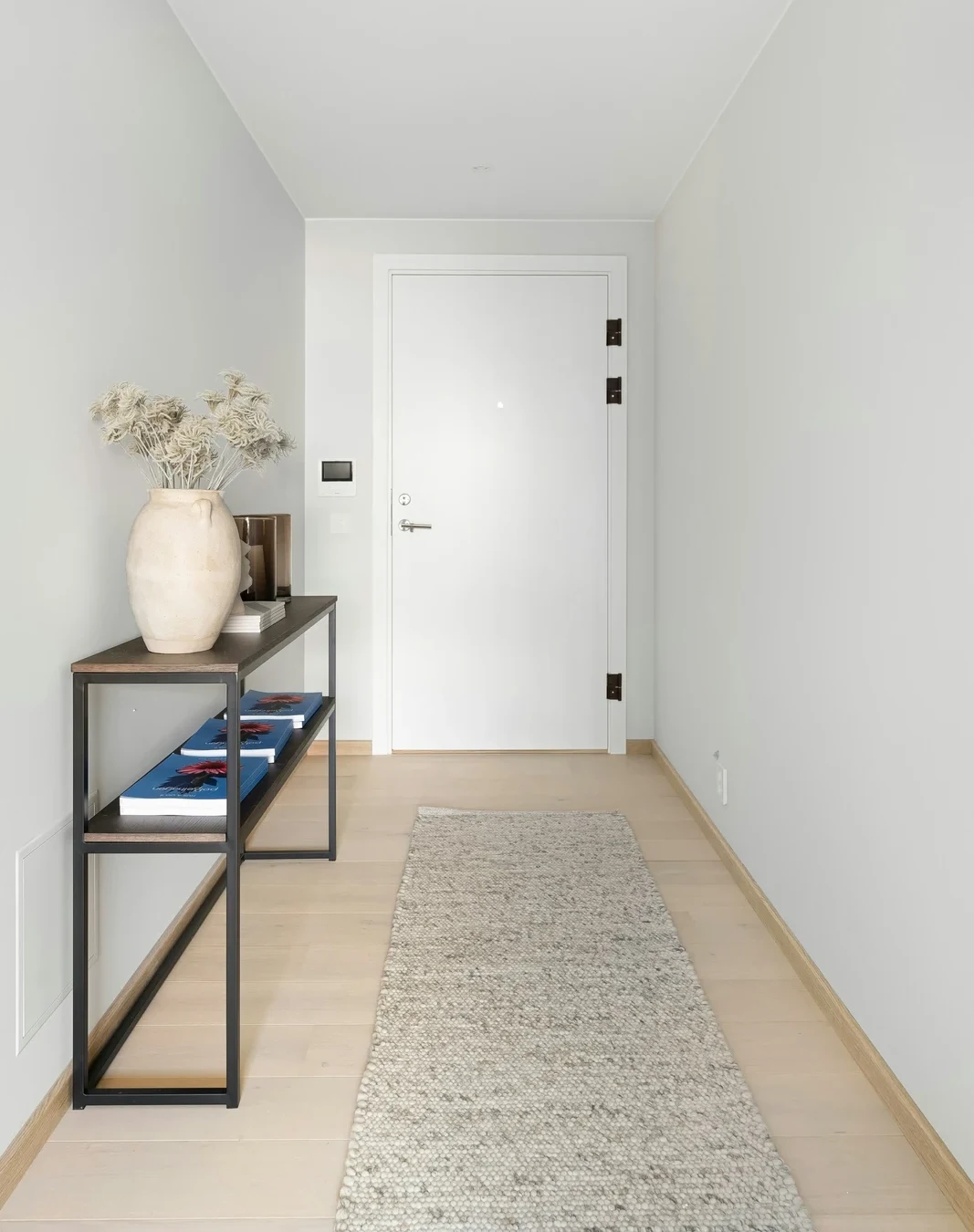
Measure the narrowest point rather than the wall-to-wall width alone. For example, an 8-inch-deep console in a 48-inch-wide hall leaves 40 inches locally before allowing for handles or other projections. That is a calculation, not a recommended minimum. Door swings, mobility needs and applicable requirements may make the console unsuitable even when it fits.
If a shallow console still leaves the route feeling tight, remove it. A wall-mounted ledge, hooks in a suitable location or storage in an adjacent room can solve the same household task without consuming as much floor depth.
A dark hall needs useful light, not just a lighter paint color
Light paint can help distribute available light, but it cannot create light where very little exists. First ask where the darkness occurs. Is the whole corridor dim, or only the middle between two brighter rooms? Does one ceiling fixture leave faces, door handles or a floor-level change hard to see?
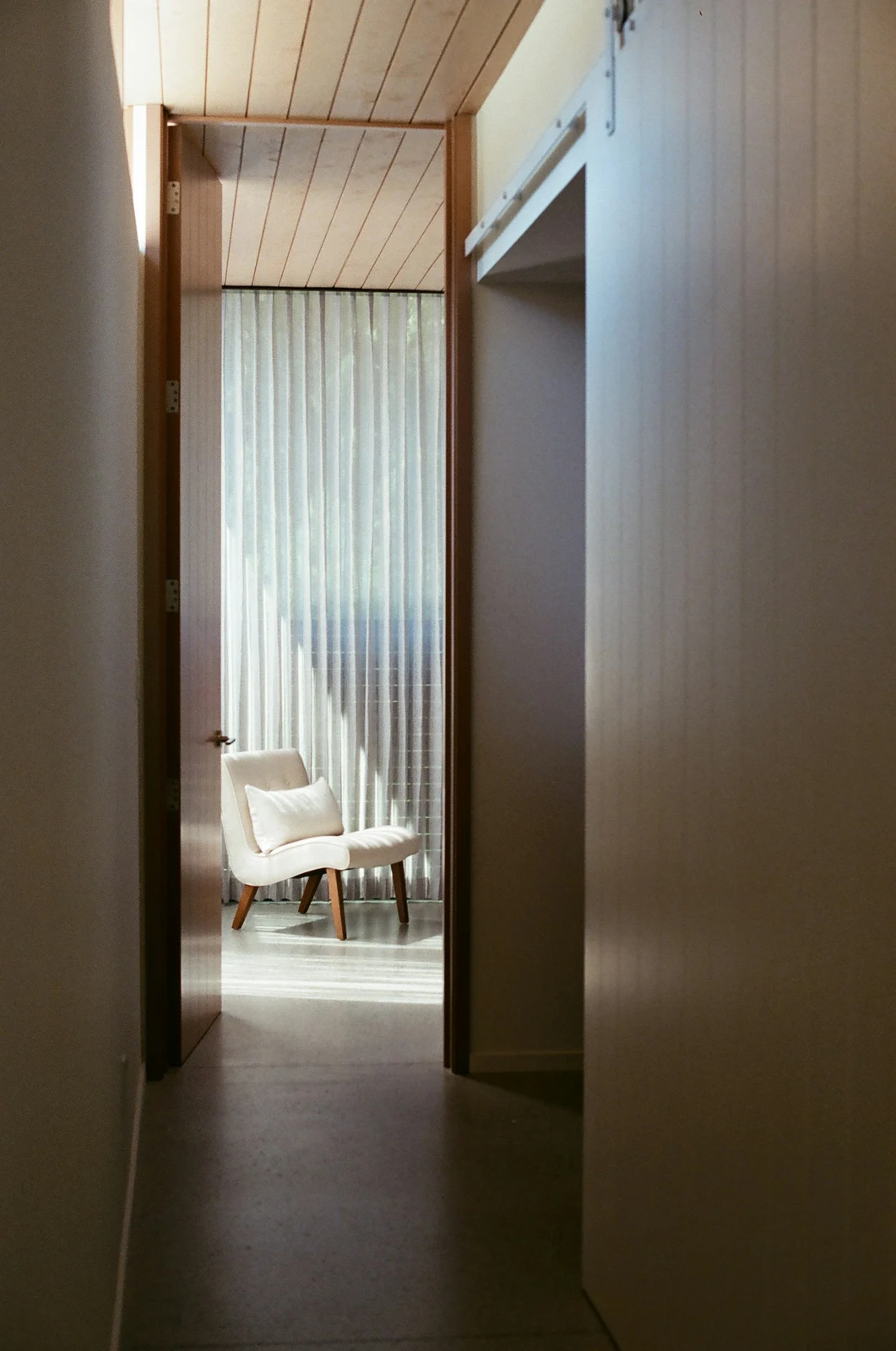
Use the Feng Shui lighting guide to separate general illumination from a local task. In a passage, the task is simple: people should be able to read the route, doors and changes in floor level comfortably.
If electrical work is needed, use a qualified professional and follow local requirements. Do not treat a decorative sconce recommendation as wiring advice.
Use a console only when the corridor can afford it
A hallway console is useful when it catches keys, mail or a small lamp without making people turn their shoulders to pass. It is not a required Feng Shui object.
In a tight corridor, the strongest layout may be an empty floor with wall-mounted art. If you need a landing place for small items, consider a narrow wall ledge or storage closer to the room where the objects actually belong.
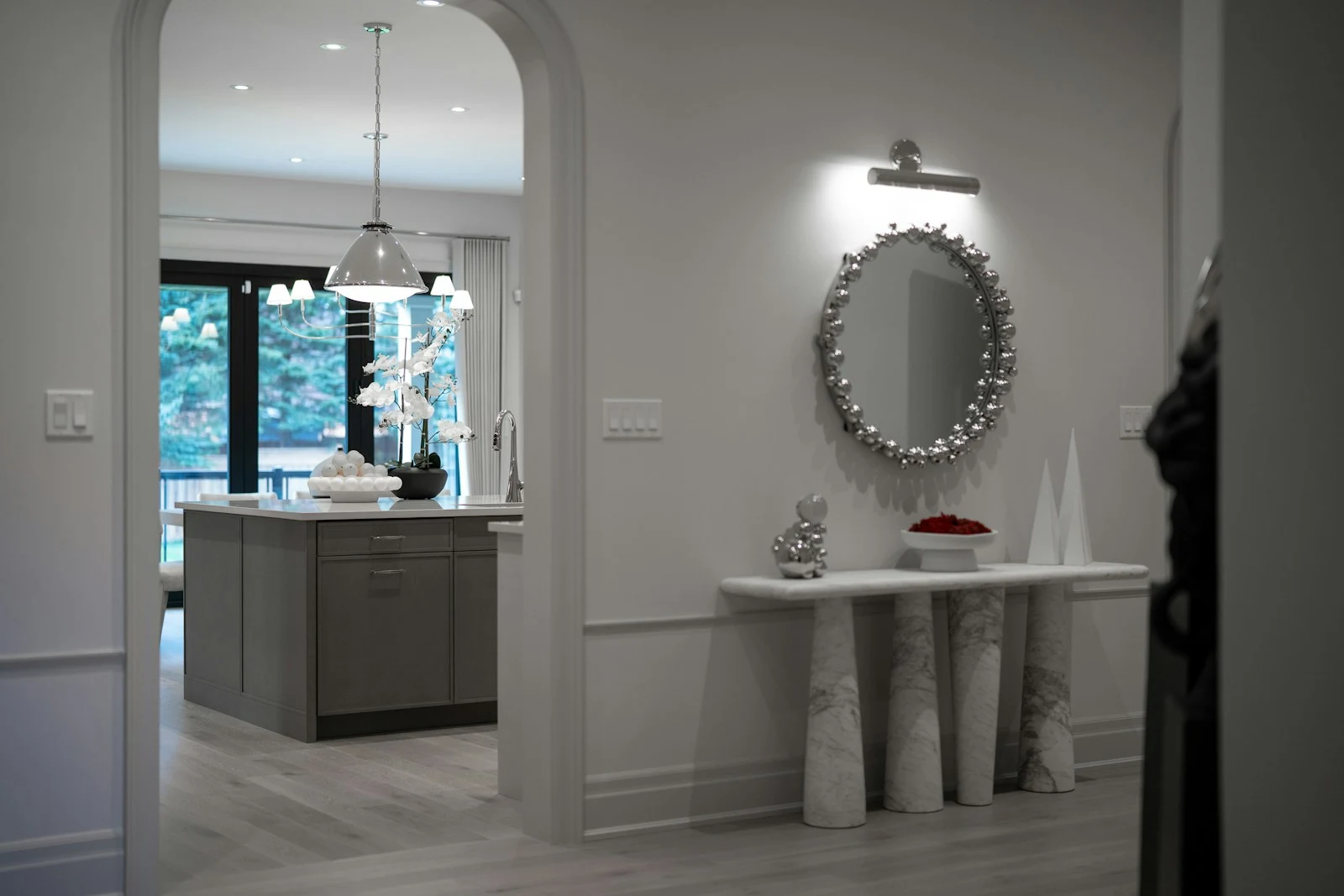
Avoid using a console to create a visual "cure" if it becomes the main physical problem. Circulation wins over decorative alignment.
For a drop zone, size the surface around what you actually put down. A bag needs more depth than a key tray. Measure that depth in the hallway and test passing with a coat or laundry basket, not just standing beside the console.
Mirrors and art should stay on the wall, visually and physically
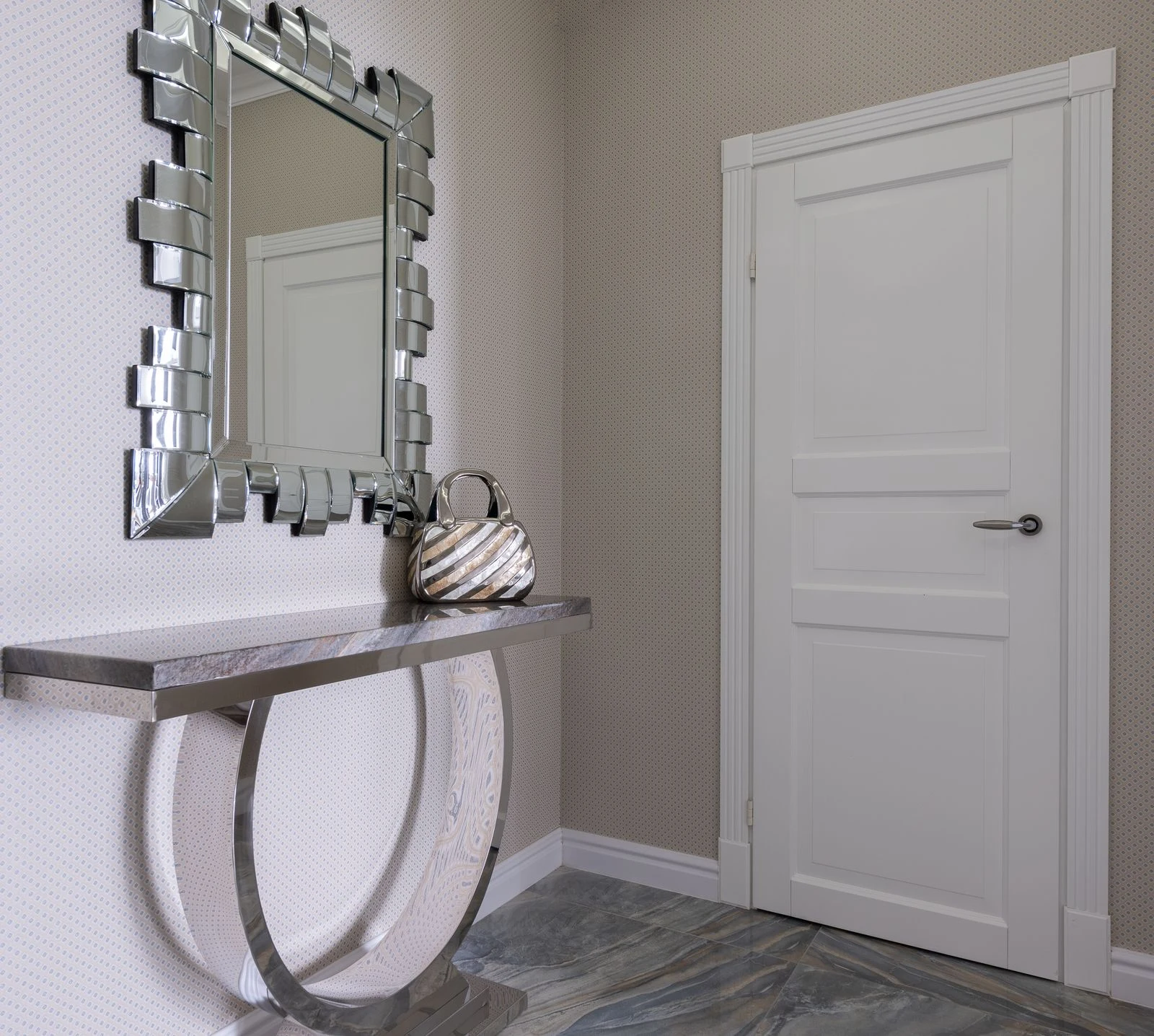
A mirror can make a narrow hallway feel more layered, but its reflected view matters. If it reflects a cluttered doorway, a harsh light or another mirror, the result may feel busier rather than calmer. Use our Feng Shui mirror guide for the reflection decision.
Art is usually easier. Keep frames appropriately mounted and avoid deep shelves or projecting objects at shoulder height in a tight route. A sequence of smaller pieces can slow the visual rhythm of a long wall without changing the floor plan.
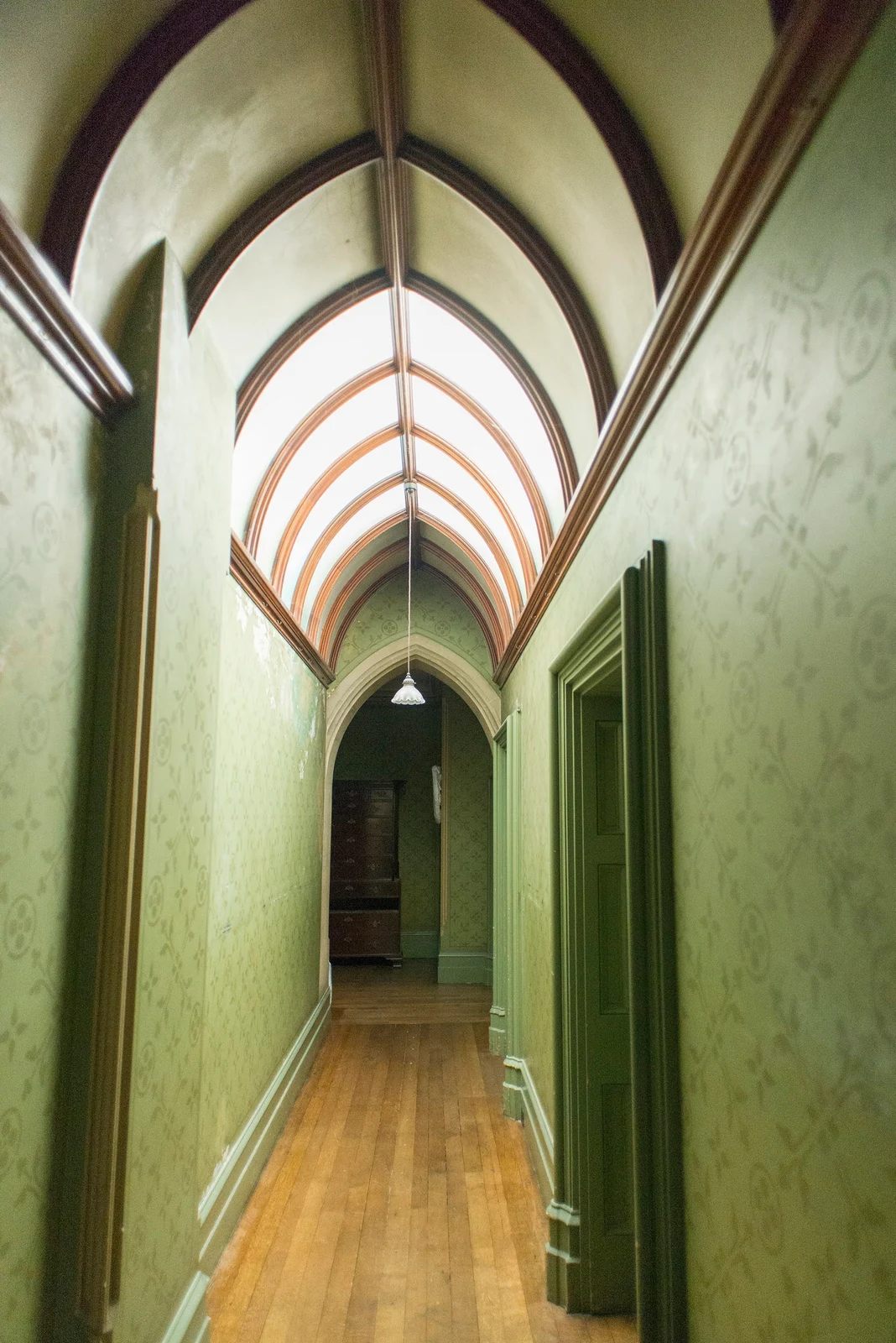
Runners need the same route test as furniture
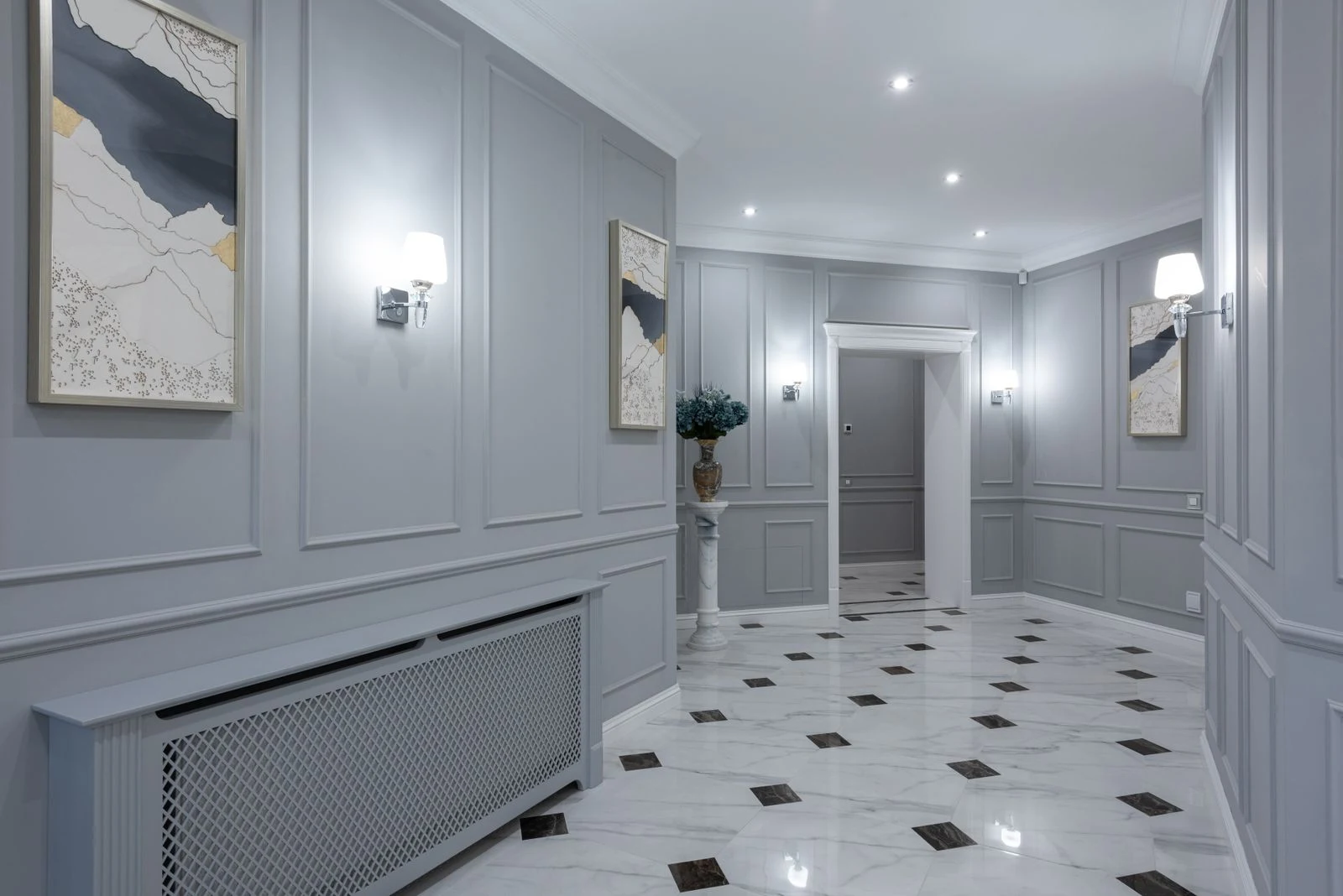
A runner can soften sound and visually organize a long hall. It can also slide, curl or catch a door. The CDC fall-prevention checklist recommends removing loose throw rugs or using appropriate non-slip backing or tape in fall-prevention guidance.
Check the runner with all doors moving through their full swing. If a bathroom or bedroom door scrapes the pile, choose a lower-profile option or skip the runner. Keep the edges out of awkward turning points where possible.
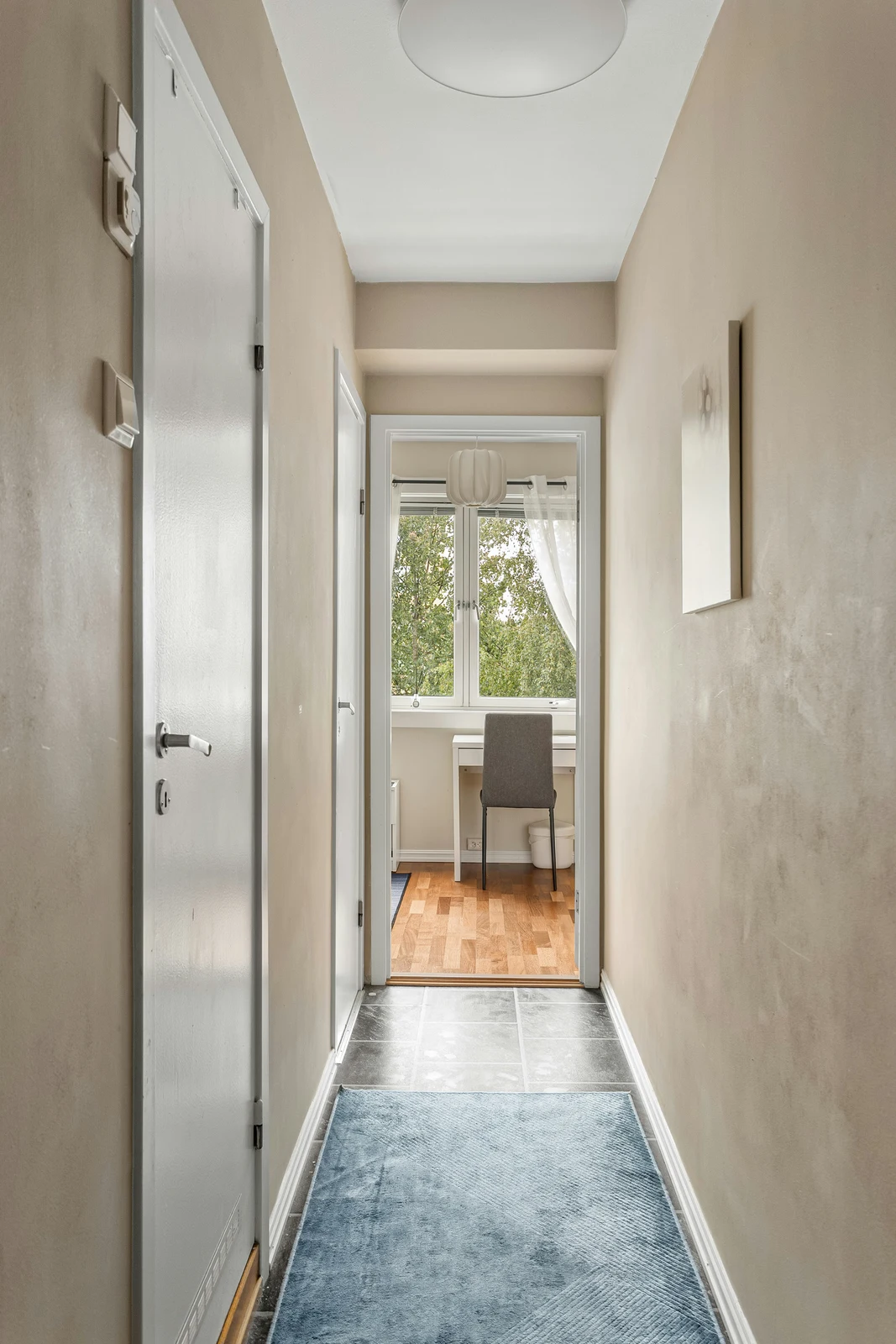
Rug color can then support the corridor's mood. Use the Feng Shui rug guide for scale and edge decisions.
Make the end of the hallway useful, not theatrical
Long hallways naturally pull attention toward the far end. You can use that by placing one clear visual destination there: a piece of art, a well-lit doorway, a plant where conditions suit it, or simply a calm wall color.
Do not block the end of the passage with furniture purely to slow "energy." The destination should organize the view while preserving the route.
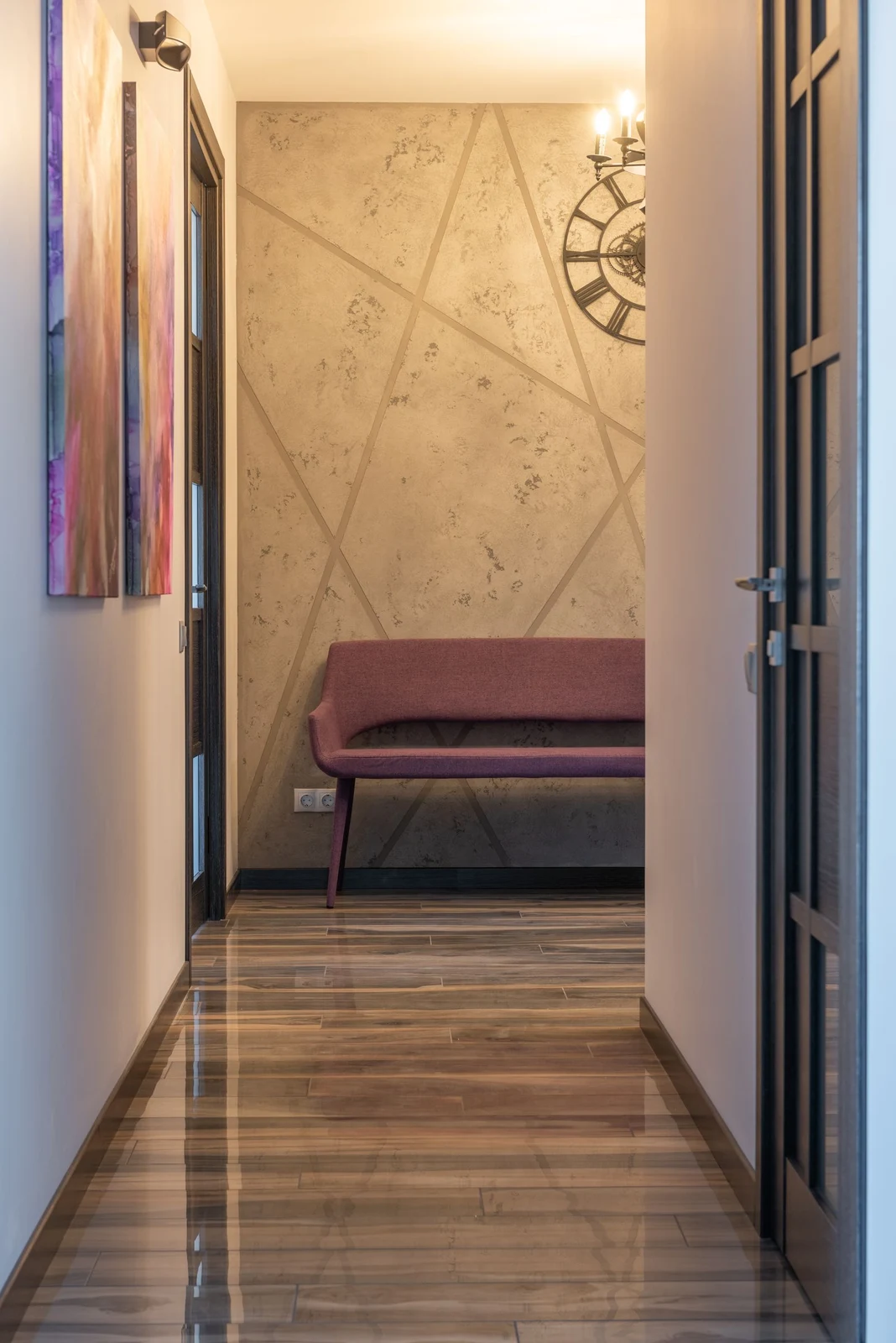

A hallway feels settled when the eye has somewhere to land and the body can move there without negotiation.
A reversible hallway reset
Before buying anything, remove temporary storage from the floor, open every door, switch on the existing lights and photograph the hall from both ends. Then test only one change at a time: light, runner, art, mirror or shallow storage.
This keeps the corridor from becoming a collection of fixes layered on top of one another. The best hallway solution is often quieter than the original problem suggests.