



Quick Answer
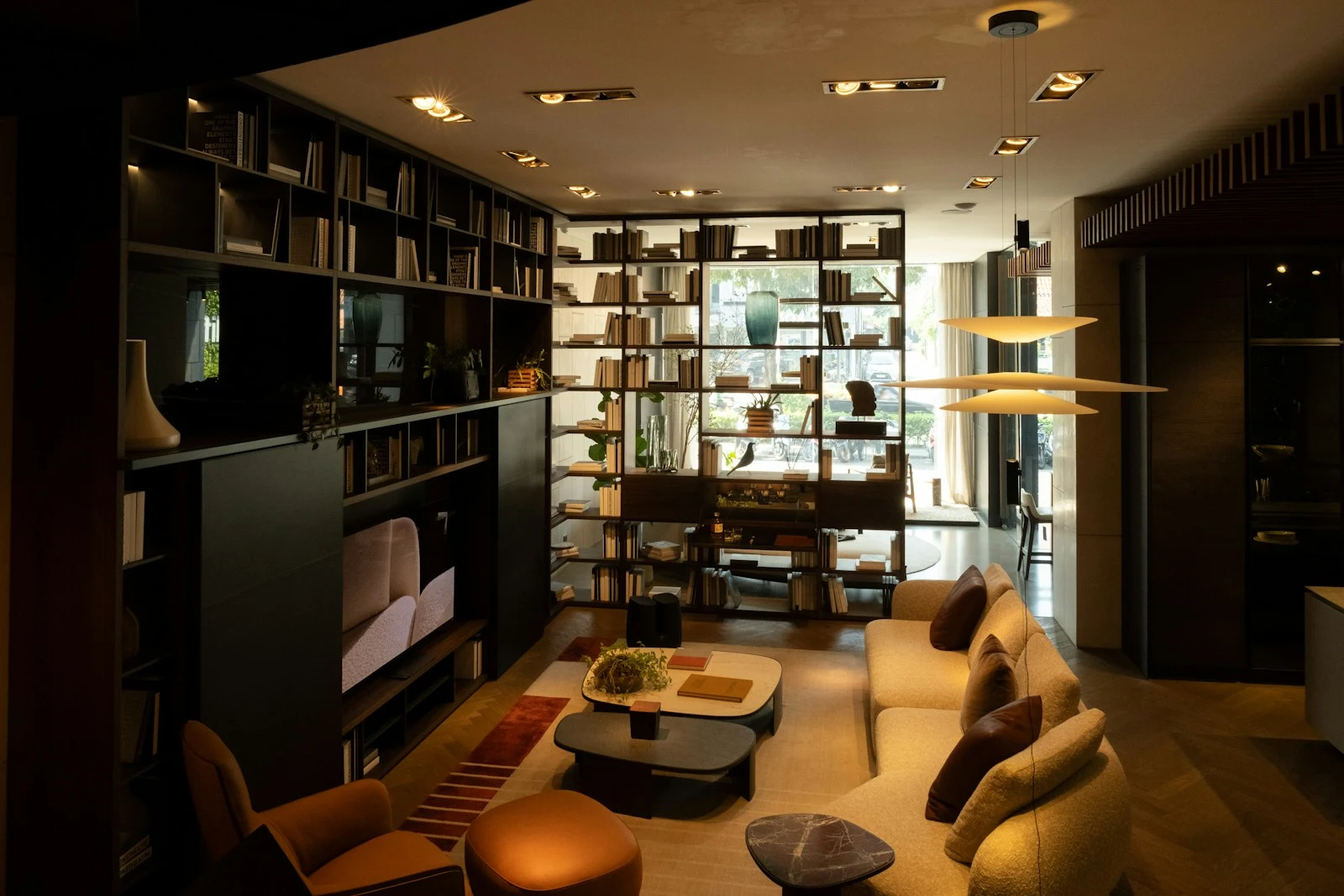
Put a bookshelf where its depth does not squeeze the route, where doors and drawers can still open, and where the unit can be installed and secured according to the manufacturer's instructions. A shallow case can work in a corridor that cannot tolerate a deep unit. A deeper bookcase can work well in a living room when it has enough floor area and does not loom over a seat or bed.
Feng Shui bookshelf advice often jumps to compass sectors or claims that open shelves create "cutting" energy. Those ideas can be discussed as traditions, but they do not answer the main household question: does this bookcase fit the room safely and comfortably?
This page is about bookcase location, depth, loading and visual scale. For clothing storage, use Feng Shui wardrobe placement. For sorting what you own, use Feng Shui decluttering ideas.
Choose depth from the room, not from the catalog photo
Bookcases with the same height and width can behave very differently because of depth. A deep case projects into the route and can make a narrow hall or small office feel compressed. A shallower unit may hold fewer oversized books, but it can preserve the space people actually need to move.
Before buying, tape the case footprint on the floor and its width on the wall. Open the nearest door, sit at the desk or edge of the bed, and walk past the taped footprint. That simple test is more reliable than choosing by style first.
Compare a shallow hallway case with a deeper living-room case
A hallway and living room ask the same piece of furniture to do different jobs. The hallway prioritizes passage. The living room can often trade more floor depth for more storage.
For a worked example, a passage measuring 48 inches before furniture would leave 38 inches beside a 10-inch-deep case, or 32 inches beside a 16-inch-deep case. These calculations show the depth trade-off, not recommended accessibility or building-code minima. Allow for handles, skirting and nearby door swings in your own measurements.
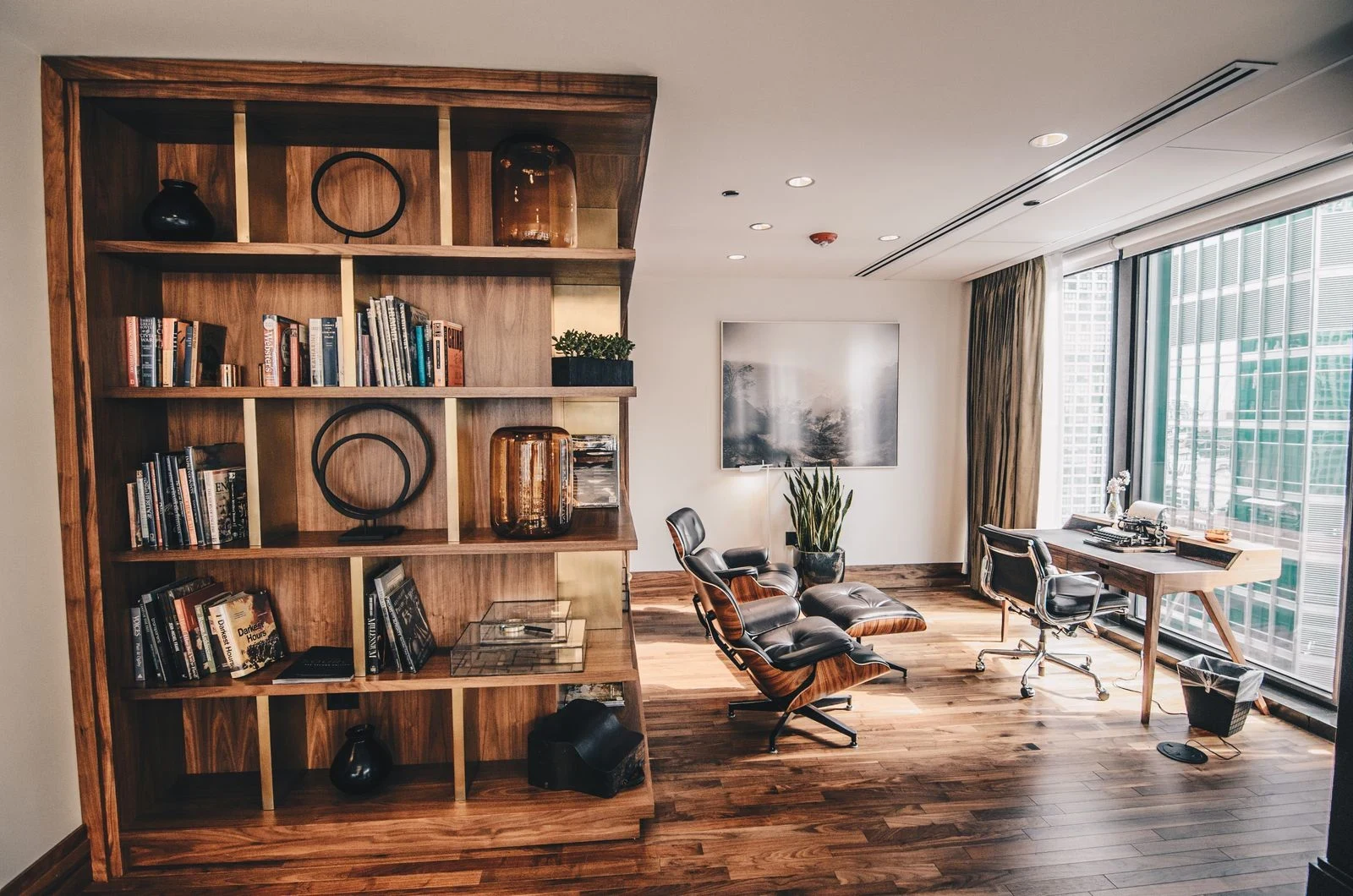
If the deeper unit leaves the route feeling pinched, the answer is not a Feng Shui cure. Use the shallower case, move storage to another room or skip the bookcase on that wall.
Keep doors, desks and beds usable
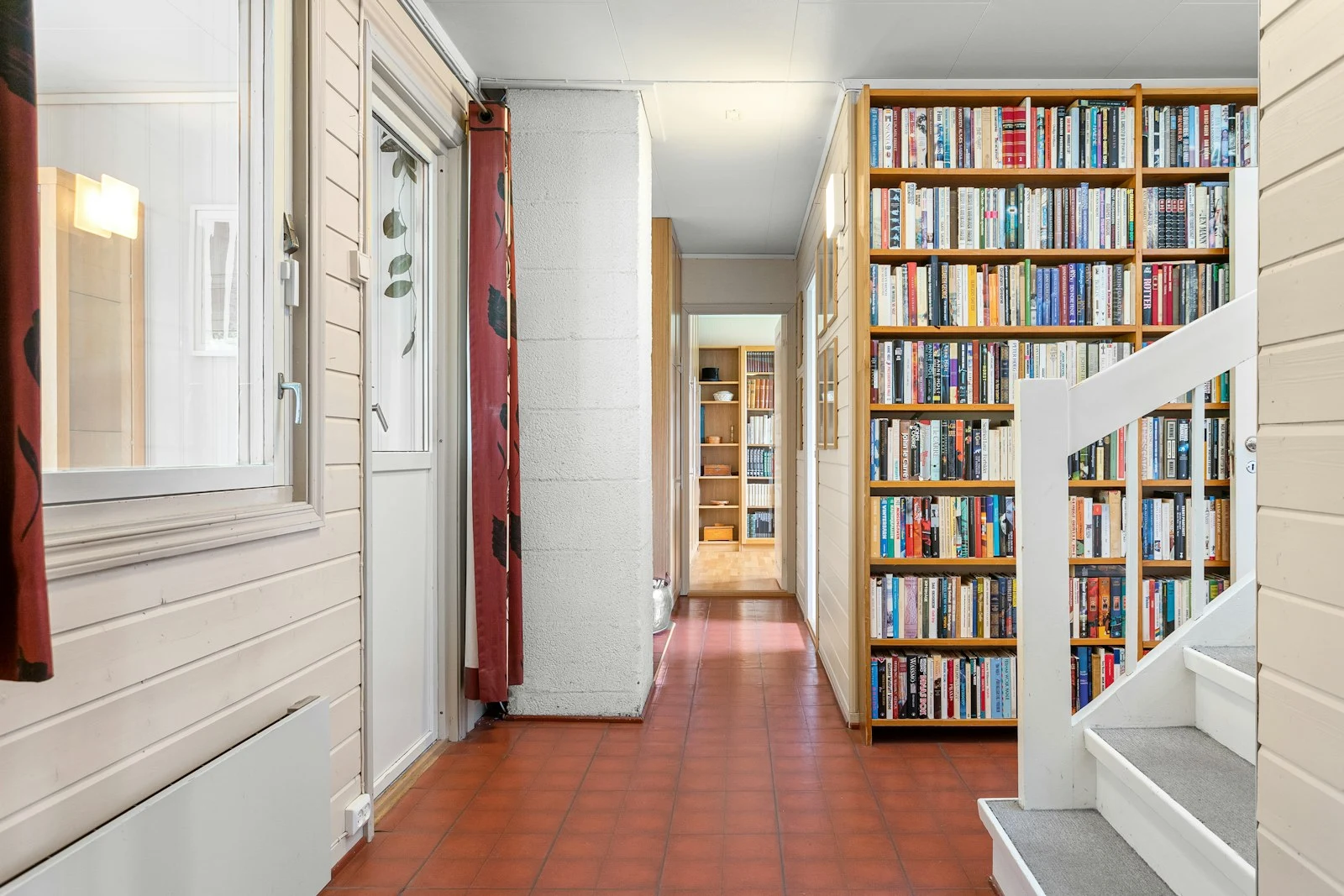
A bookshelf beside a desk can be excellent because reference material is reachable. It becomes a problem when the case blocks the chair from moving back, makes a drawer inaccessible or forces the user to squeeze between two deep pieces.
Near a bed, think about visual weight and physical stability. A tall full bookcase directly beside the pillow can feel imposing even when it fits on paper. A lower unit, a different wall or closed storage may feel calmer. Avoid placing heavy unsecured storage where a person sleeps or sits below it.
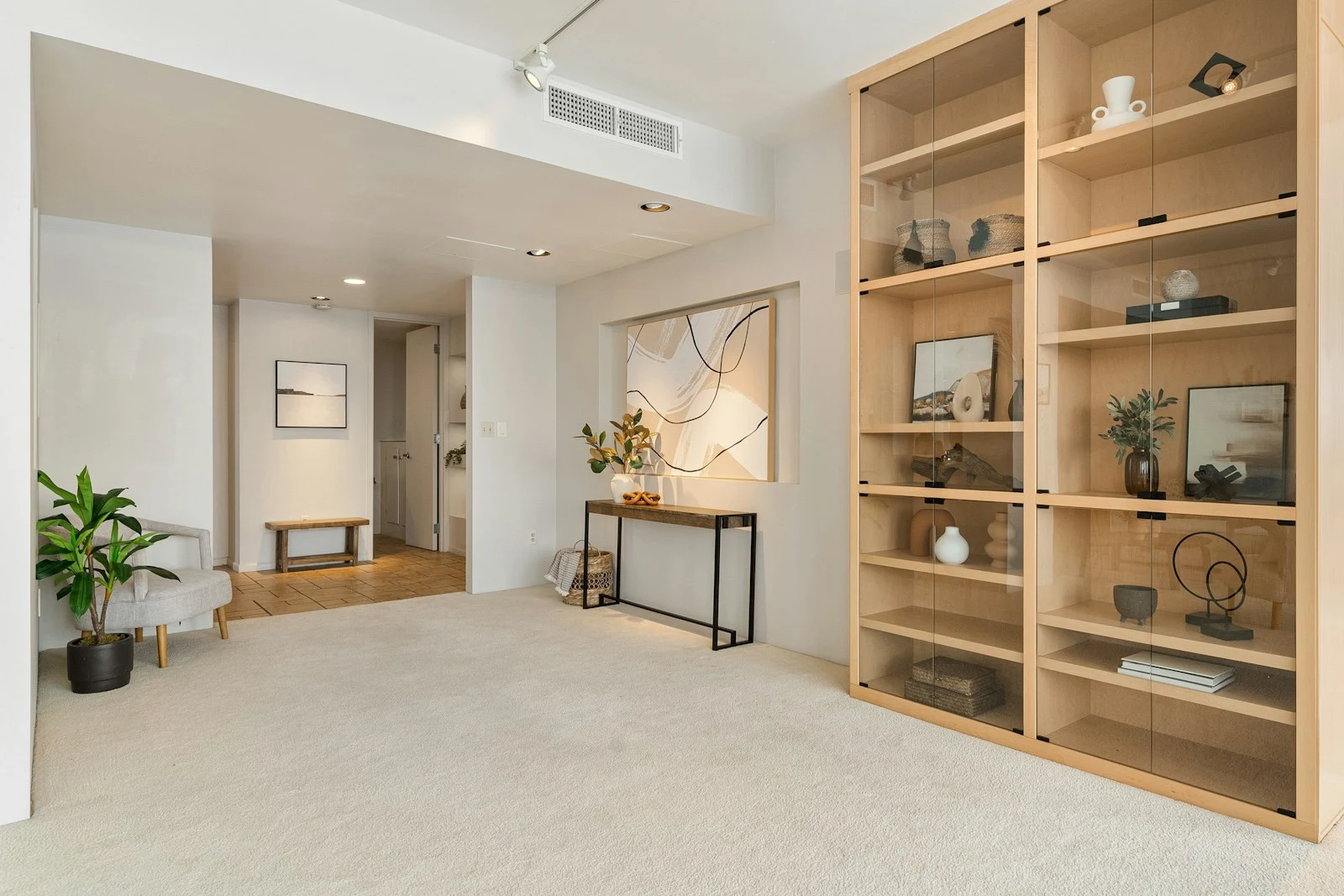
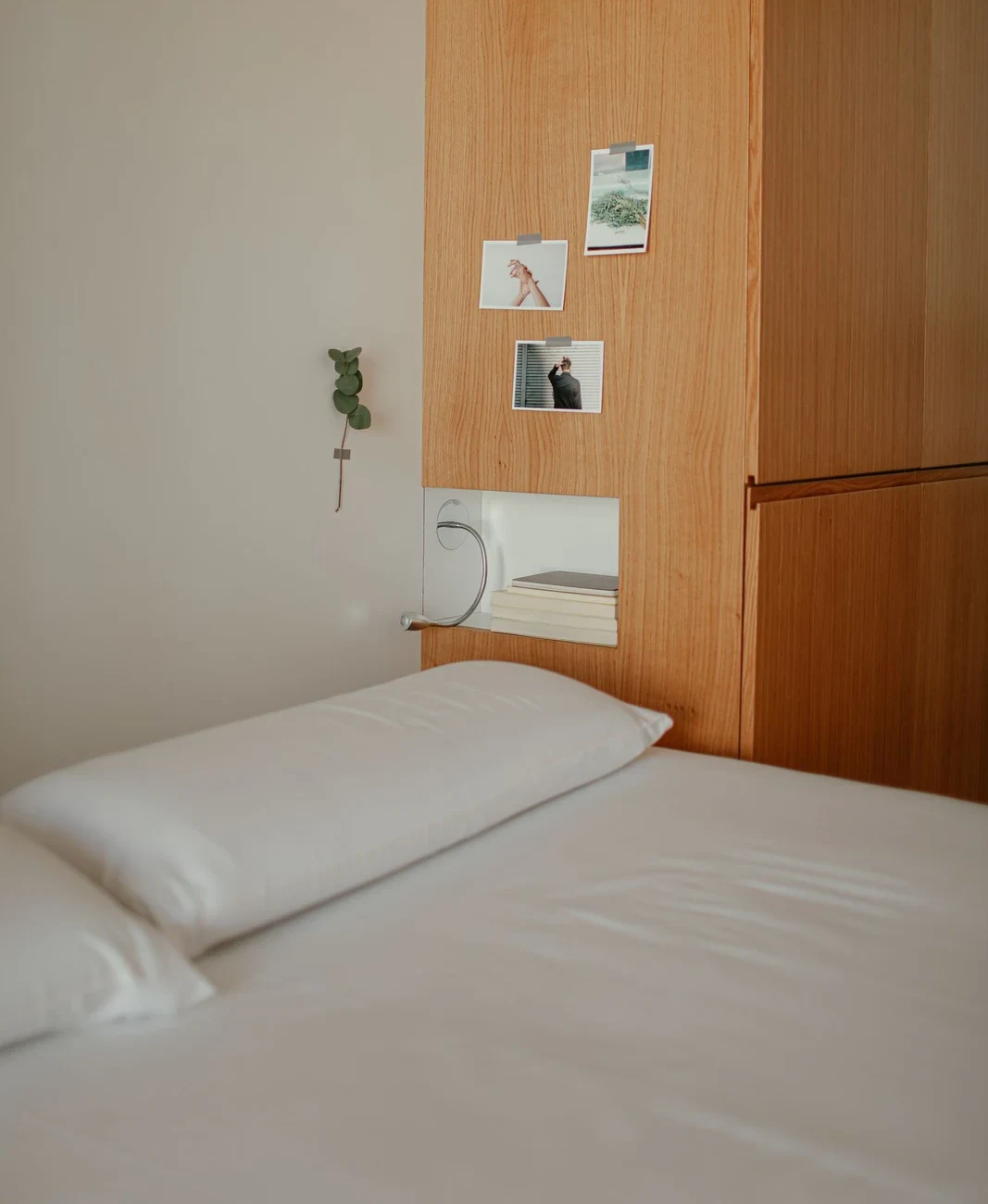
In a bedroom, test the view from the pillow as well as the floor footprint. Put a lower case on a wall away from the head of the bed if a tall unit feels imposing. Do not place unsecured heavy storage above the sleeping position; check stability and the maker's instructions before styling.
The Feng Shui items for office guide can help if the bookcase is one part of a larger desk and storage problem.
Anchor the furniture according to the actual product
Tall furniture can tip. The U.S. Consumer Product Safety Commission urges households to secure top-heavy furniture and to follow the manufacturer's instructions for the anchoring system.
Do not copy generic screw, plug or bracket instructions from a decor article. Wall construction varies, and the correct attachment method depends on the furniture, supplied anti-tip device and wall structure. If you do not know the wall construction or cannot install the anchor correctly, get appropriate professional help.
Keep heavy books on reachable lower shelves where practical, and respect the load rating for each shelf. Loading is not a substitute for anchoring: follow the bookcase maker's instructions even when the bottom shelves hold most of the weight.
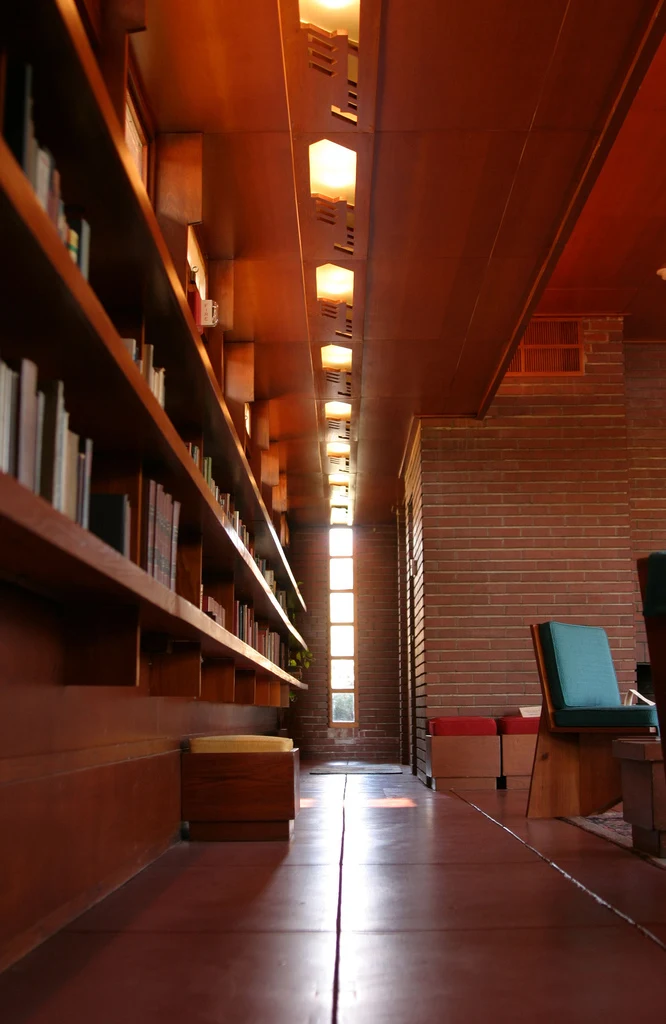

Open shelves do not need to be visually full
Traditional and modern Feng Shui writing sometimes treats cluttered shelves as stagnant or mentally noisy. You do not need a fixed "percentage empty" rule to use that insight.
Leave enough breathing room that you can remove a book without dismantling a display. Group objects deliberately. Keep frequently used books reachable. Closed boxes or doors can contain visually small items if the shelf becomes too busy.
A bookshelf should look like storage that is being used, not a showroom. Personal books, family objects and imperfect collections can still feel calm when the case has an understandable structure.
Measure maintenance, not only installation
A bookcase can fit perfectly on day one and be awkward for years because the highest shelves are unreachable, the floor vent is blocked, the baseboard prevents it from sitting correctly or the delivery route is too tight.
Before purchase, check ceiling height, skirting or baseboard, outlets, vents, doorways, stairs and the route the packaged or assembled piece must travel. Confirm how shelves are adjusted and how the anti-tip system is installed.
For a hallway location, also ask whether the shelf will become a drop zone. If keys, bags, mail and shoes accumulate around it, the storage job may be wrong for that passage.
Feng Shui direction is a secondary filter
The entrance-aligned BTB bagua map includes a knowledge and self-cultivation area. If you use that framework, a reading shelf can express its purpose. Keep it separate from compass-based mapping, and choose a viable furniture location before using symbolism as a tie-breaker.
A bookcase in a preferred sector is not a stronger choice if it blocks a door or cannot be secured. When two equally practical locations remain, symbolic direction can be a useful tie-breaker.