



Quick Answer
A rug should make a furniture group easier to read and use. Decide which zone the rug belongs to, test its full footprint with the furniture in place, then check door clearance and trip risk. In a living room, the rug should connect the seating instead of floating like a small island. In a dining room, chairs should be able to move through normal use without repeatedly catching an edge.
Feng Shui often describes rugs as grounding or as a way to gather a room. The most useful translation is spatial: a rug gives a seating or dining group a visible boundary. For the complete seating arrangement, use Feng Shui living-room furniture placement.
Give the rug one clear job
A rug becomes difficult to place when it is expected to solve the entire room. First decide whether it is defining the conversation area, dining area, bedside zone, reading corner or a transition route.
In an open-plan room, this is especially important. Two furniture groups can share one large floor, but the rug can tell the eye which chairs belong to the sofa and which chairs belong to the dining table. That visual grouping is more useful than choosing a rug solely because its color is associated with a Feng Shui element.
Compare the rug with the whole seating group
A common problem is an attractive rug that is too small to visually connect the main pieces. The coffee table fits, but the sofa and chairs sit beyond the edges, so the rug reads as a separate object instead of the floor plane of the seating zone.
There is no universal rug percentage that works in every living room. Furniture depth, sofa width, chair angle, room shape and the amount of exposed floor all change the result. Treat common sizes such as 5 x 8 ft and 8 x 10 ft as examples, not as Feng Shui rules.
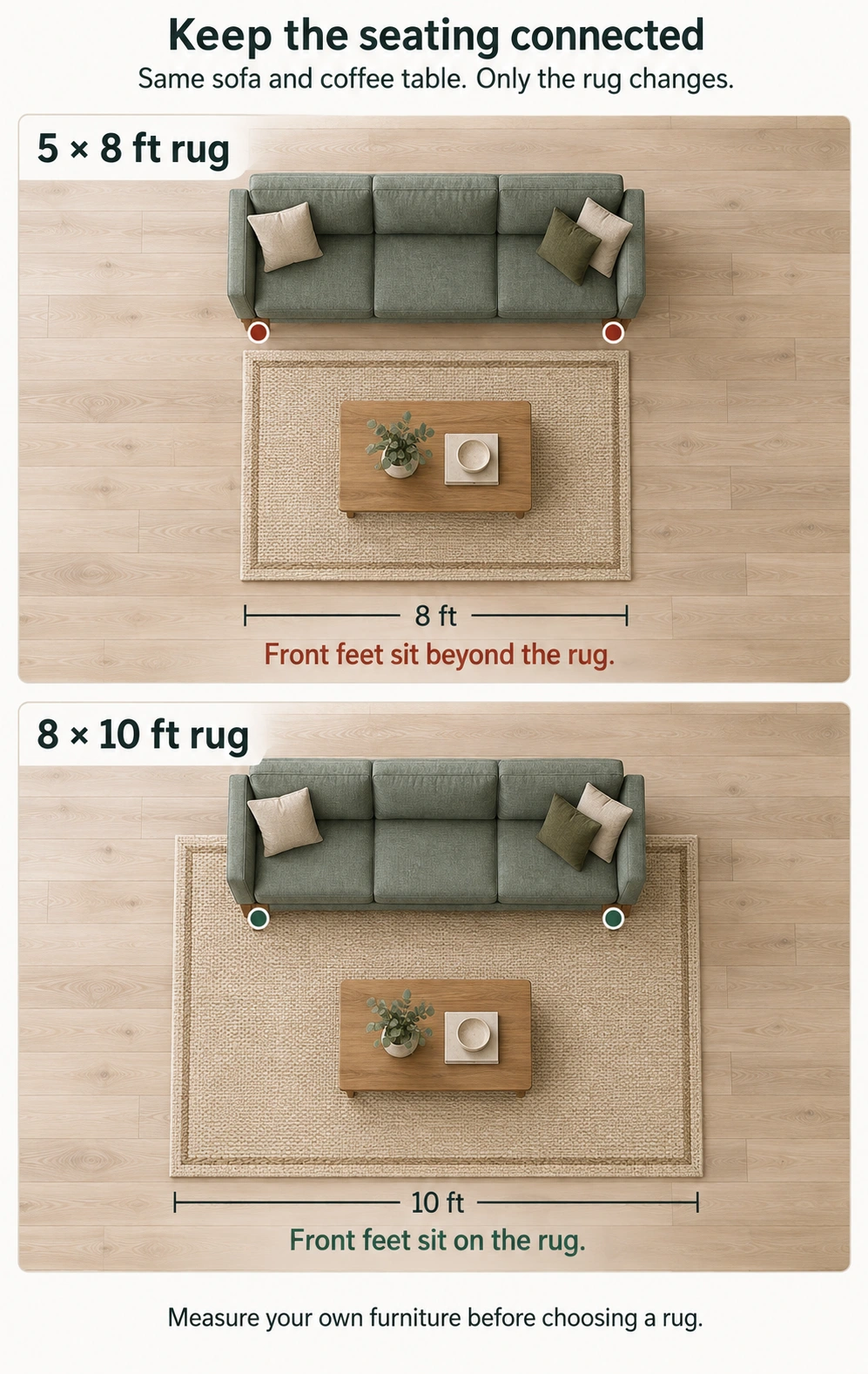
A useful test is to mark the proposed rug with painter's tape before ordering. Sit in the chairs, walk around the table and look from the doorway. If the taped footprint looks disconnected from the furniture, the real rug will probably feel disconnected too.
Dining rugs need to work with moving chairs
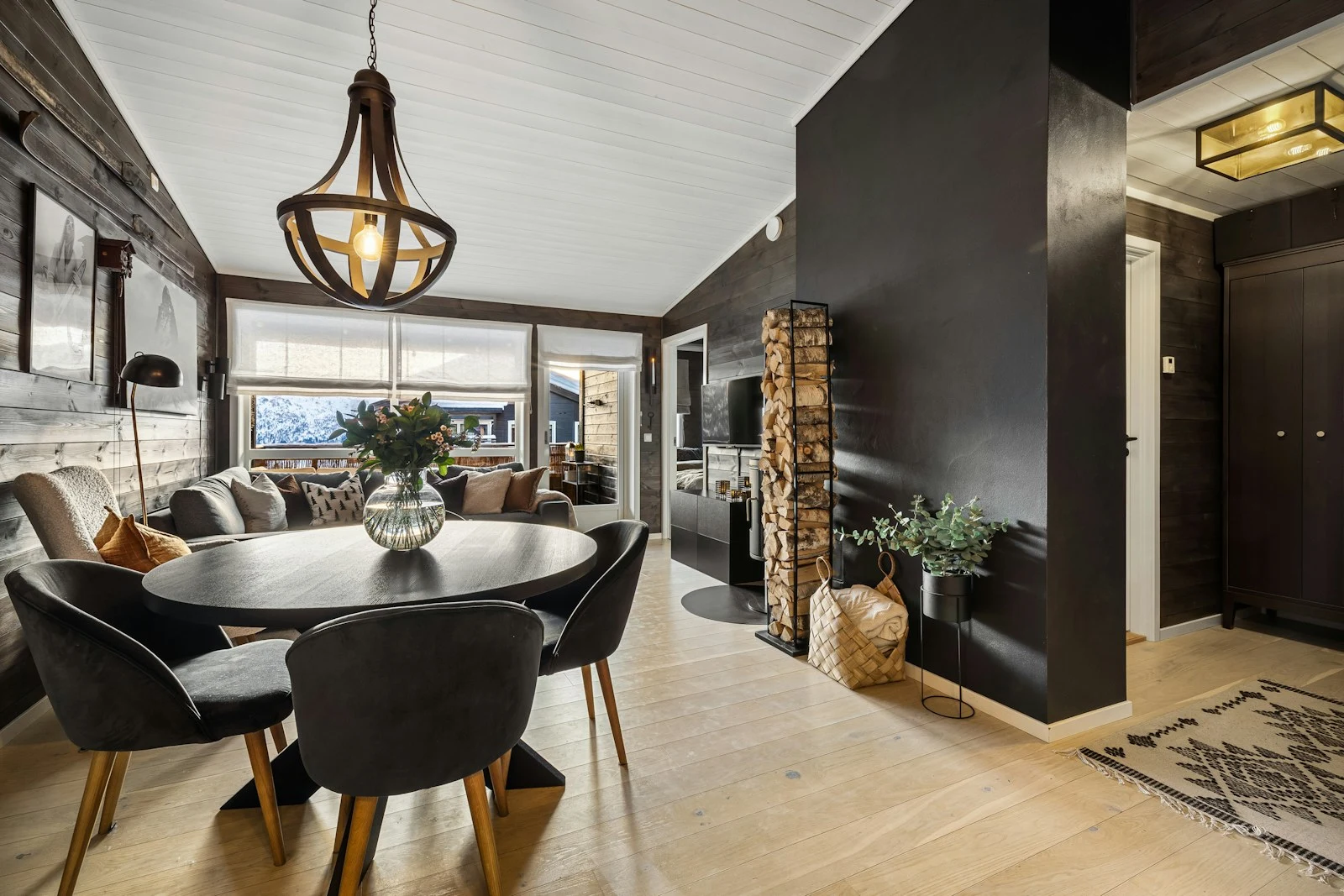
The dining room adds a movement problem that a static floor plan can hide. A chair occupies one footprint when tucked in and a larger footprint when someone pulls it back to sit down or stand up.
Instead of copying one universal extension measurement, test your actual chairs. Pull each chair back to the point where a person can comfortably enter or leave the seat. If the rear legs repeatedly fall off the rug and catch the edge, the rug is too small for that table-and-chair combination or the room may work better without a rug.
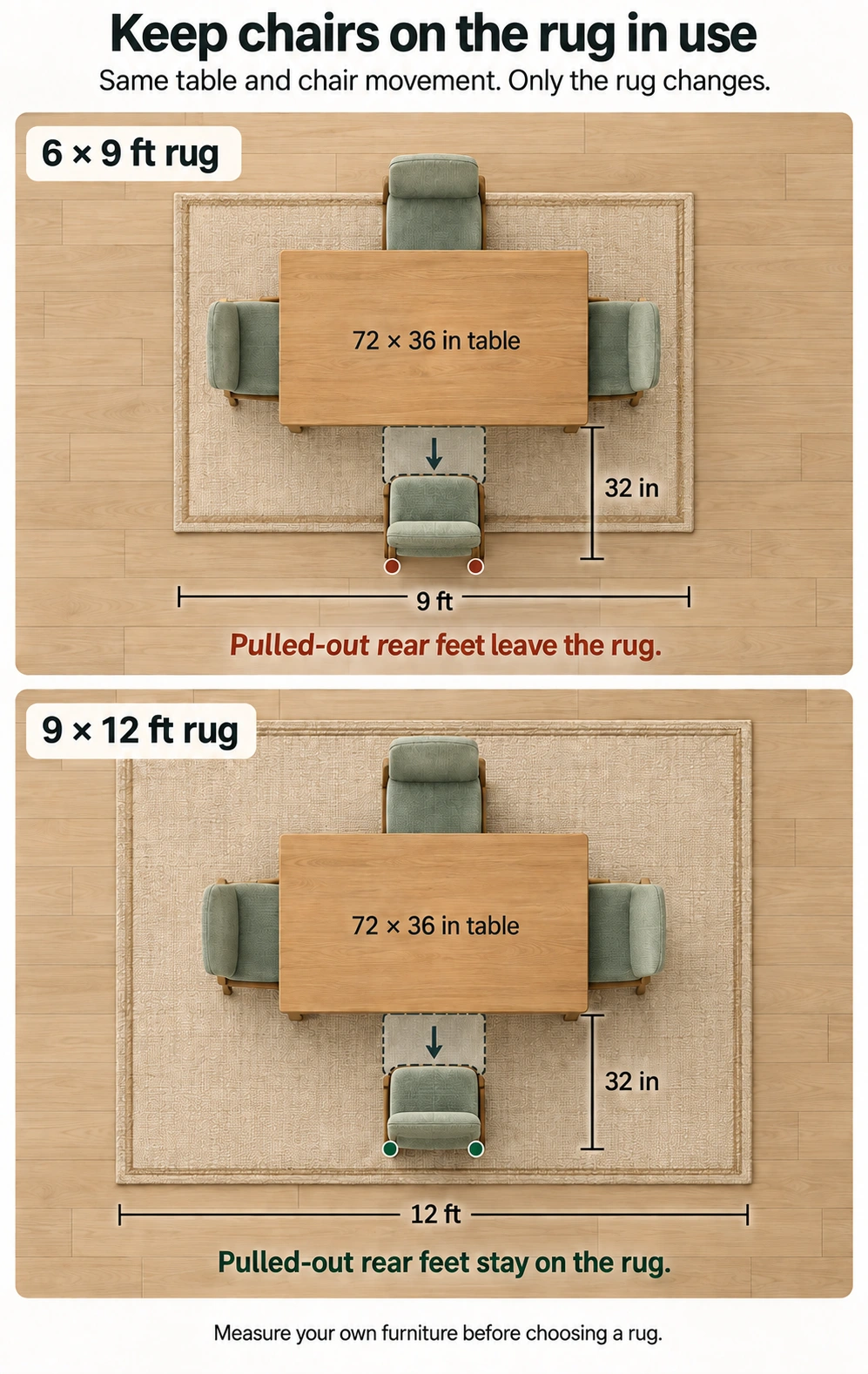
The 32-inch label represents one hypothetical chair position, not a clearance rule. Measure from your own table edge to the farthest rear foot in normal use, then allow enough rug beyond that contact point to avoid repeatedly catching the edge. Check all sides of the table, including any route behind an occupied chair.
Our Feng Shui dining-room guide covers the whole room. Here, the rug question is narrower: can people use every chair normally without fighting the rug edge?
Bedroom rugs and round rugs need their own test
Beside a bed, place a rug where your feet land when you get up. In a small bedroom, two bedside rugs can serve that task better than forcing a large rug under every piece of furniture. Check the door, drawers and the route to the bathroom in the dark, and use backing compatible with your flooring.
A round rug suits a round table or a compact reading group when its usable diameter still contains the furniture and chair movement. A circle is not automatically calmer or luckier than a rectangle. Under dining chairs, measure the pulled-out footprint across the circle, not only its advertised diameter.
Door clearance matters more than a perfect visual center
A rug can be beautifully centered and still be the wrong size if a door drags across it. Check every nearby door in its full swing, including closet and balcony doors that are easy to forget during styling.
Thick pile, rug pads and curled corners can change the effective height. Test the actual combination rather than assuming the nominal rug thickness tells the whole story. If a door catches, shift the rug only if the zone still makes sense. Otherwise choose a lower profile, a different size or no rug in that location.
The CDC fall-prevention checklist advises removing throw rugs that create trip hazards or securing them with appropriate non-slip backing or tape in fall-prevention contexts. That does not make every area rug unsafe, but it is a reminder that the edge and backing are part of the placement decision.
Material and maintenance change the best placement
A high-pile rug under a dining table may look luxurious but be frustrating to clean and harder for chairs to move across. A very light rug in a busy entry path may demand constant maintenance. A flatweave can suit a route but may need a suitable pad to stay stable on a smooth floor.
Choose the material around the household you actually have: pets, children, robot vacuums, dining spills, allergies, mobility needs and cleaning habits. A symbolic color has little value if the rug is permanently folded back to make the room usable.
Use color and pattern after the scale works
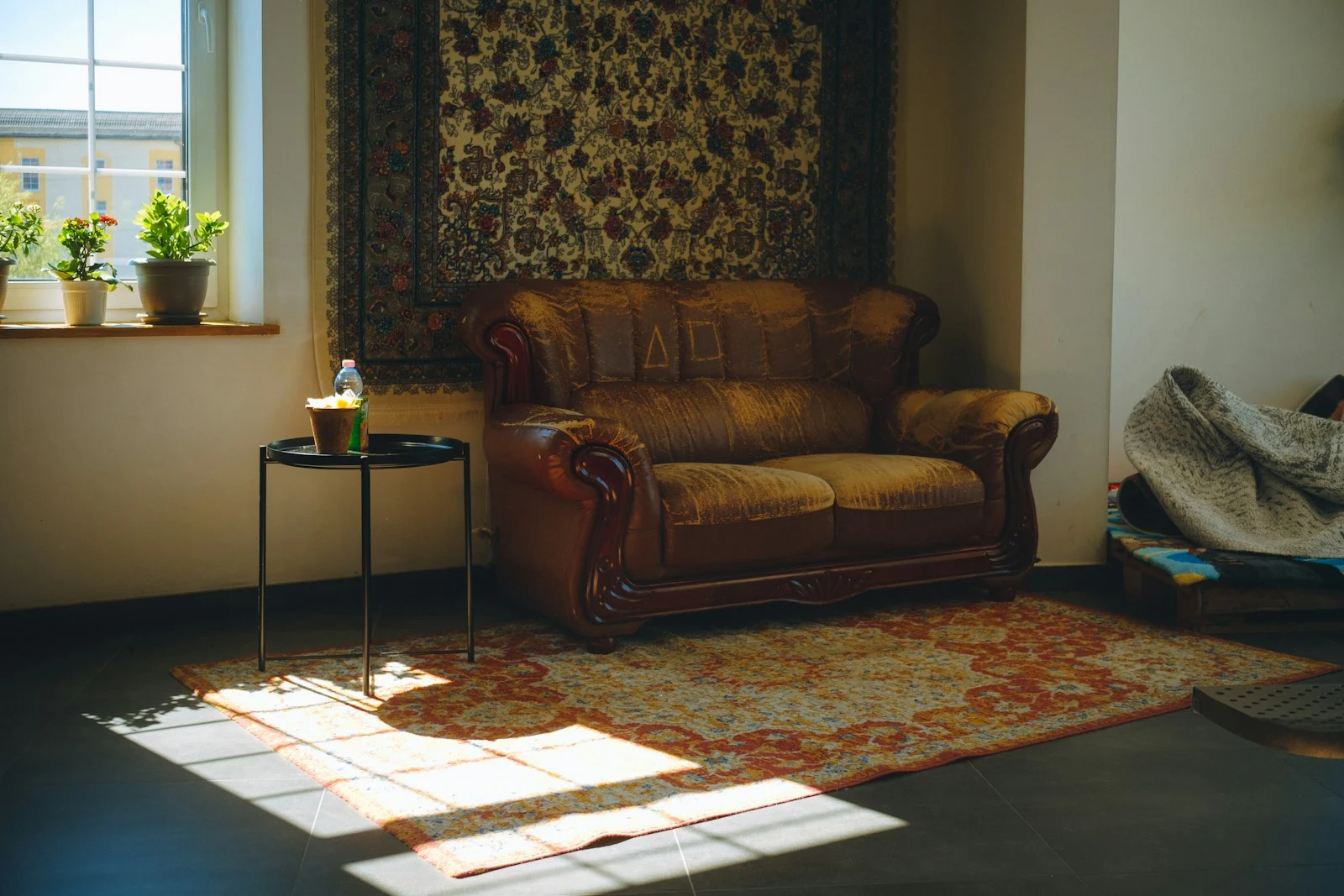
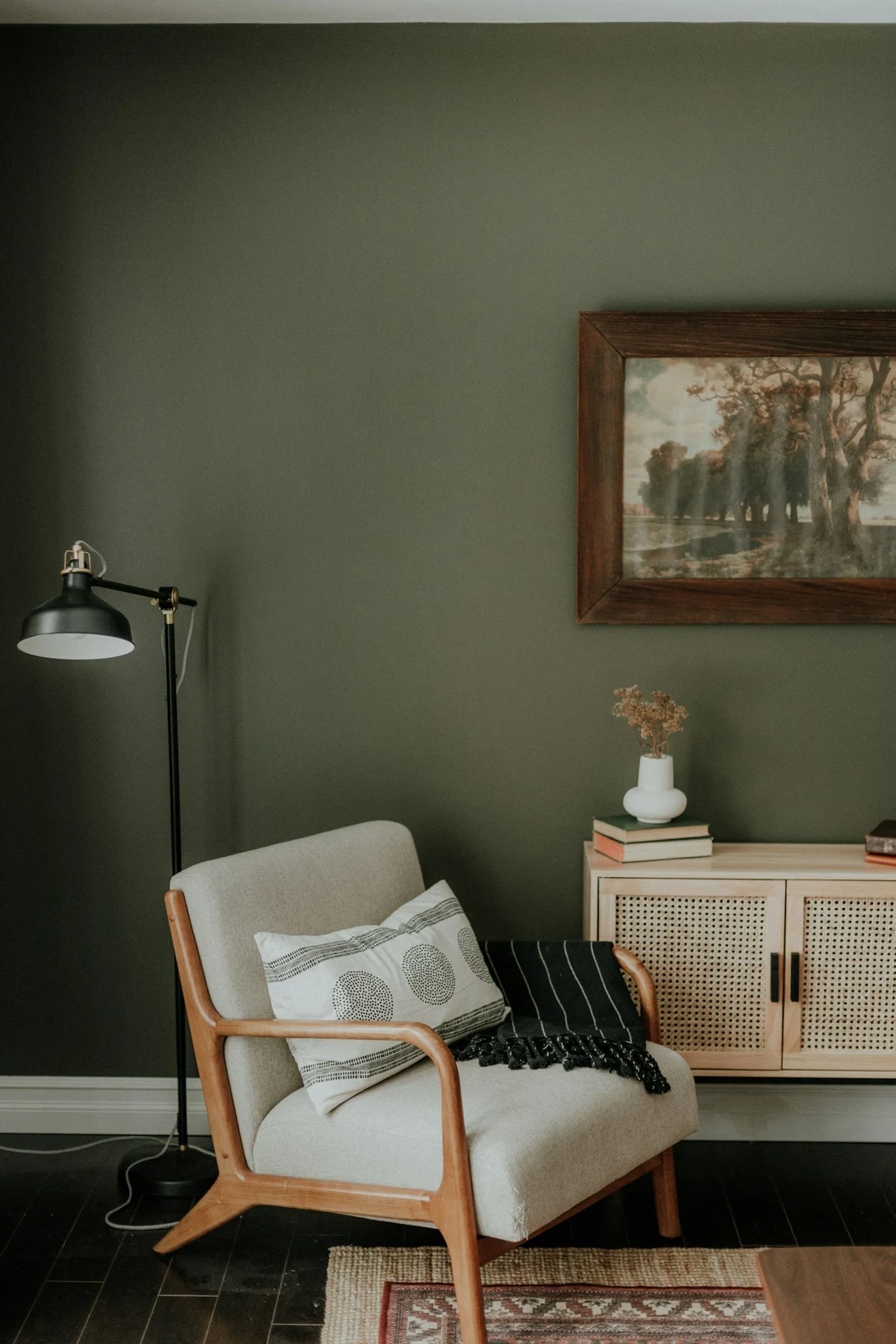
In the patterned living-room photograph above, the rug carries more visual detail than the plain upholstery. That can work because the seating and surrounding surfaces remain relatively quiet. If your sofa already has a strong pattern, try a calmer rug field and repeat one upholstery color rather than adding a competing motif.
Once the rug fits, Feng Shui color and Five Element ideas can help refine the mood. A quieter room can take a controlled pattern or stronger tone. A room with busy upholstery may benefit from a calmer field. Natural fibers, geometric patterns and botanical motifs can all work if they suit the room.
Do not turn element associations into a shopping formula. The rug occupies a large surface, so it should connect with the flooring, furniture and light before it serves a directional color theory. The Feng Shui home decorating guide covers that broader styling process.
A measured rug decision in ten minutes
Measure the furniture grouping, not only the empty floor. Tape the rug footprint. Move every chair and open every door. Walk the main route. If the rug passes those tests, then compare color, pattern, material and price.
That sequence prevents the most expensive mistake: buying the rug that looks perfect in isolation and discovering that normal room use exposes its wrong scale.