



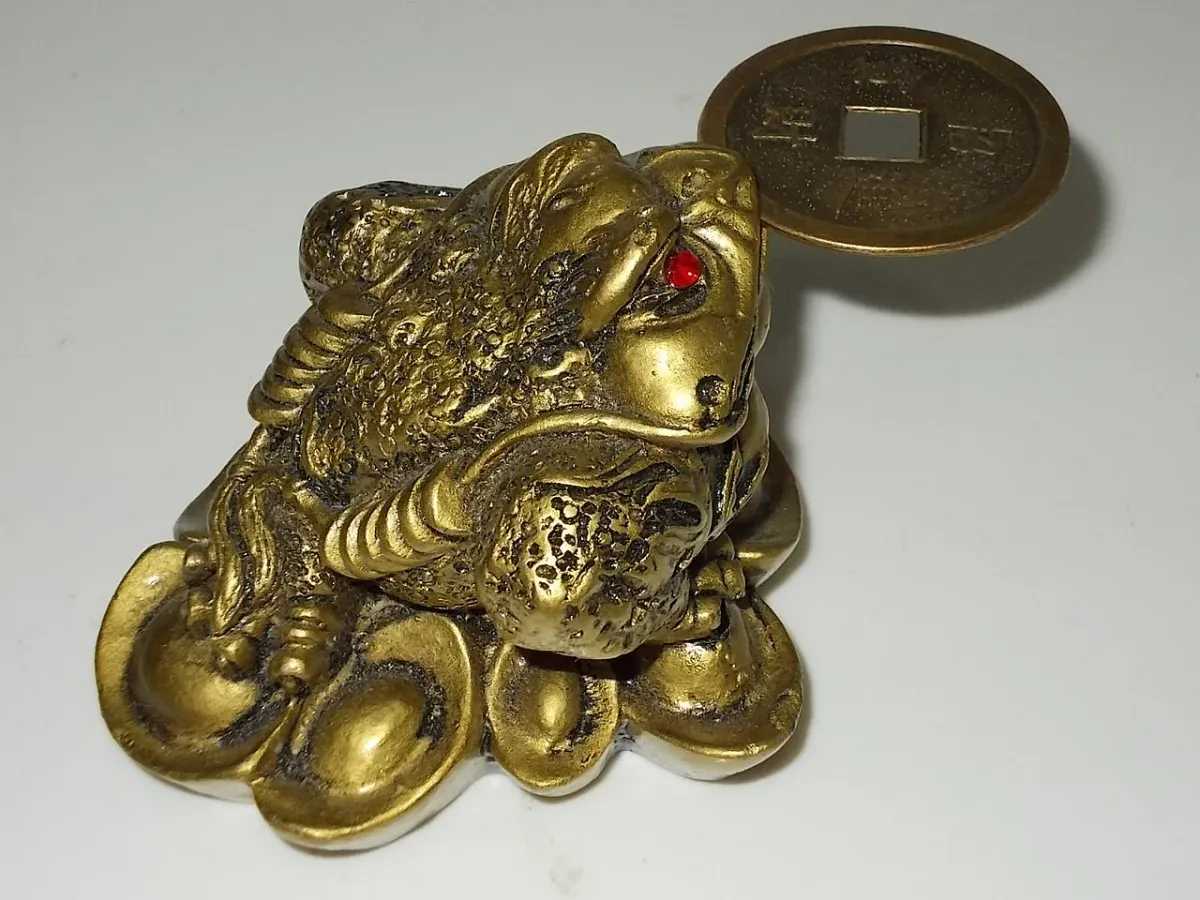
Quick Answer
A money frog is a Chinese prosperity symbol, usually shown as a three-legged toad. Display it on a stable console, shelf or side cabinet where it does not interfere with the room. Facing it inward is one familiar modern convention, not a universal rule or a promise of income. An entrance is optional, and any removable coin needs to stay out of children's and pets' reach.
A money frog can be a meaningful ornament without becoming the center of an elaborate display. The best starting point is a place you enjoy seeing, with enough space for the figure and for whatever the surface needs to do every day.
The examples below show how it can fit an entrance, living room or office. Choose the setting that works in your home, then consider the direction and tradition you want to follow.
Find a Place That Still Works for the Room
An entrance console with space for keys
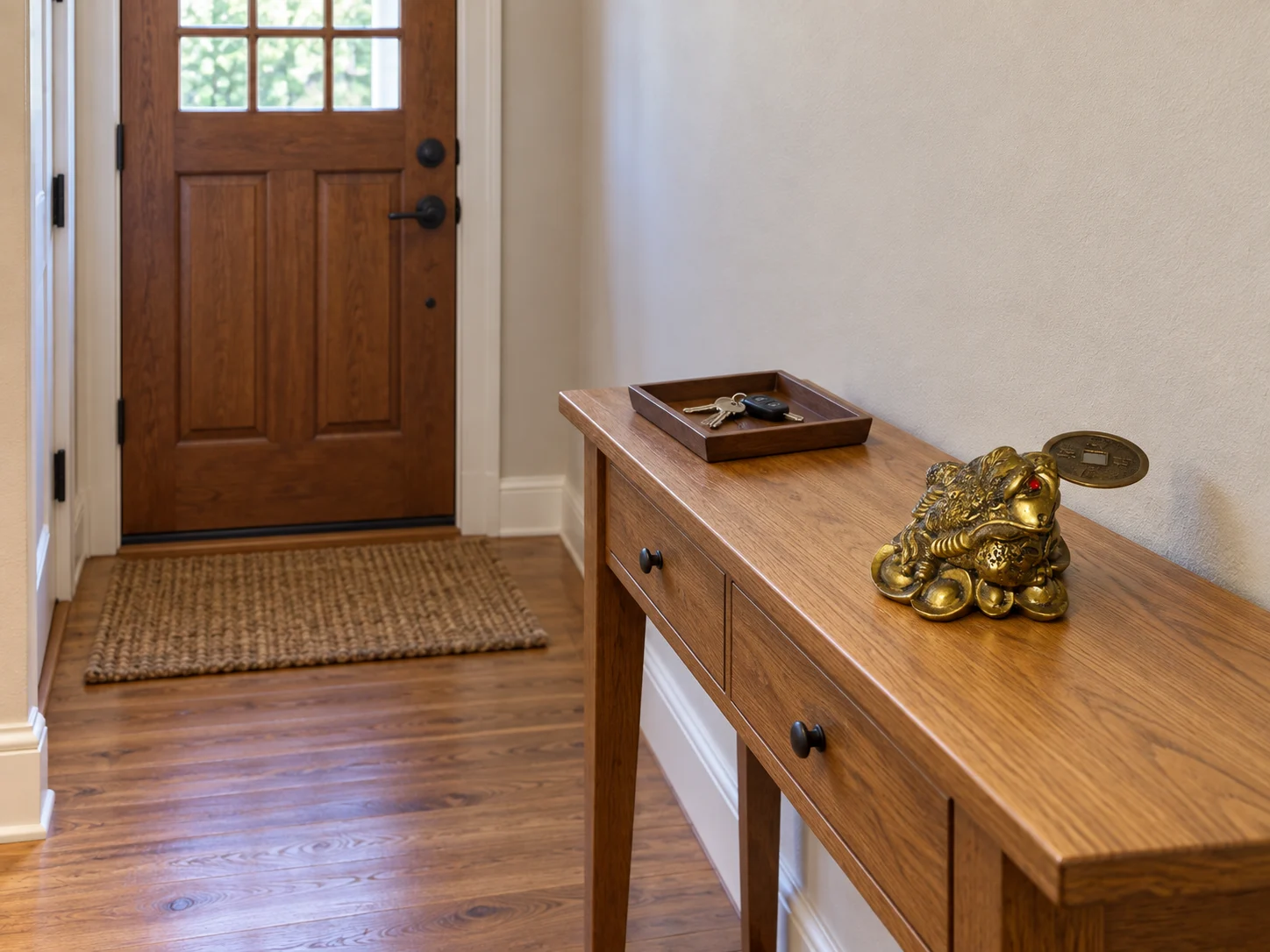
Put the key tray where your hand naturally reaches when you come home. The money frog can occupy another part of the surface, away from the spot where a bag lands or a coat swings past. It should not sit on the threshold or require people to step around it.
For example, on a 100 cm-wide console, mark the ornament's footprint with paper before buying. Try the key tray, a bag and the open door with that paper in place. If the display consumes the only useful landing space, a shelf in another room is the better choice. The entryway guide helps with the room itself.
A living-room shelf with breathing room
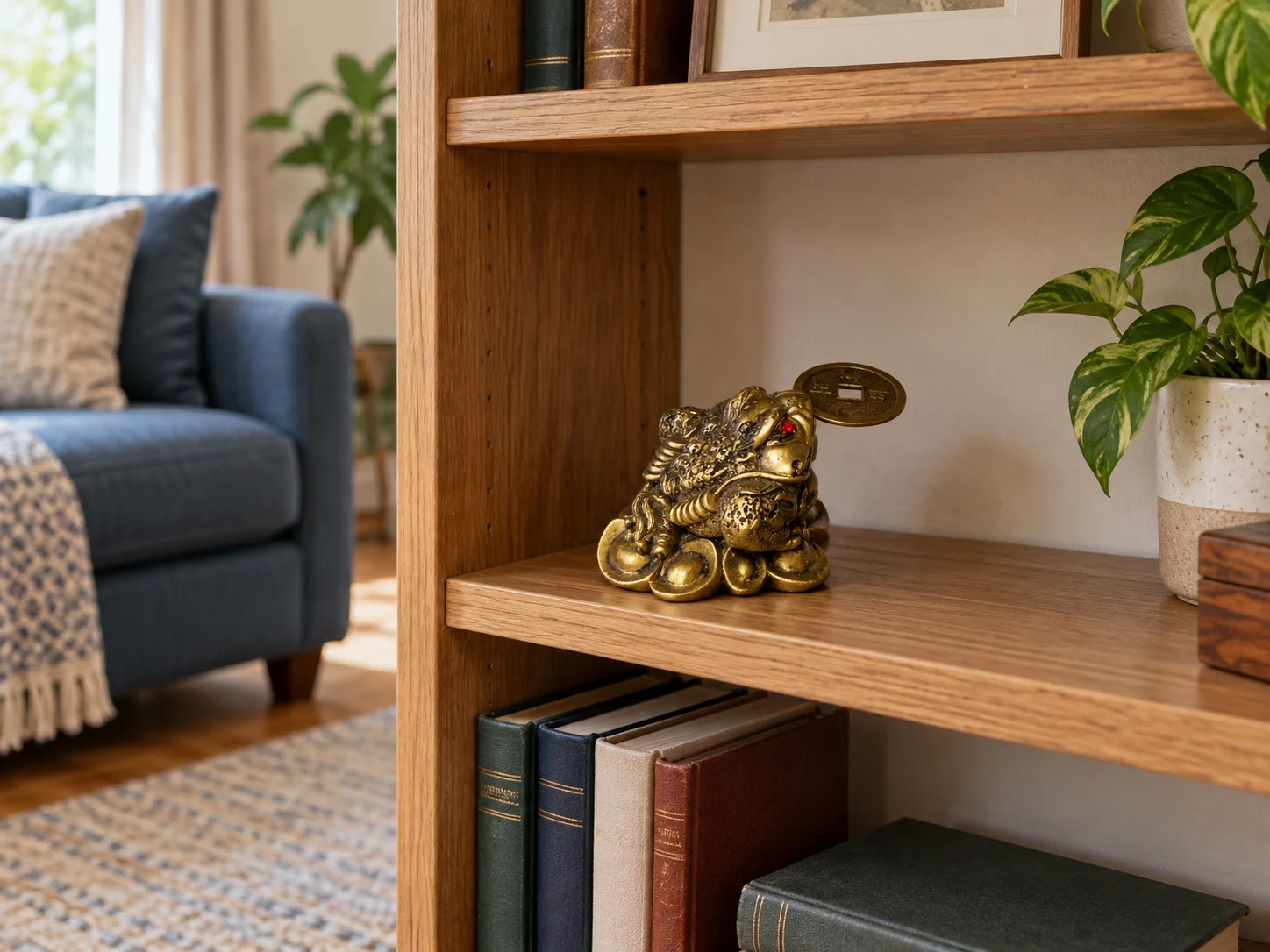
A bookcase or sideboard can work when the entrance is too small. Let the figure read as one deliberate object rather than surrounding it with a collection of unrelated charms. A personal or inherited piece does not have to match the latest decorating trend, but the display should look considered.
Choose a shelf you can clean and reach safely. Check its load rating for a heavy stone or metal figure, and secure furniture where needed. If children or pets can reach the ornament or pull it down, use a more protected display rather than relying on height alone.
An office credenza that leaves the desk free
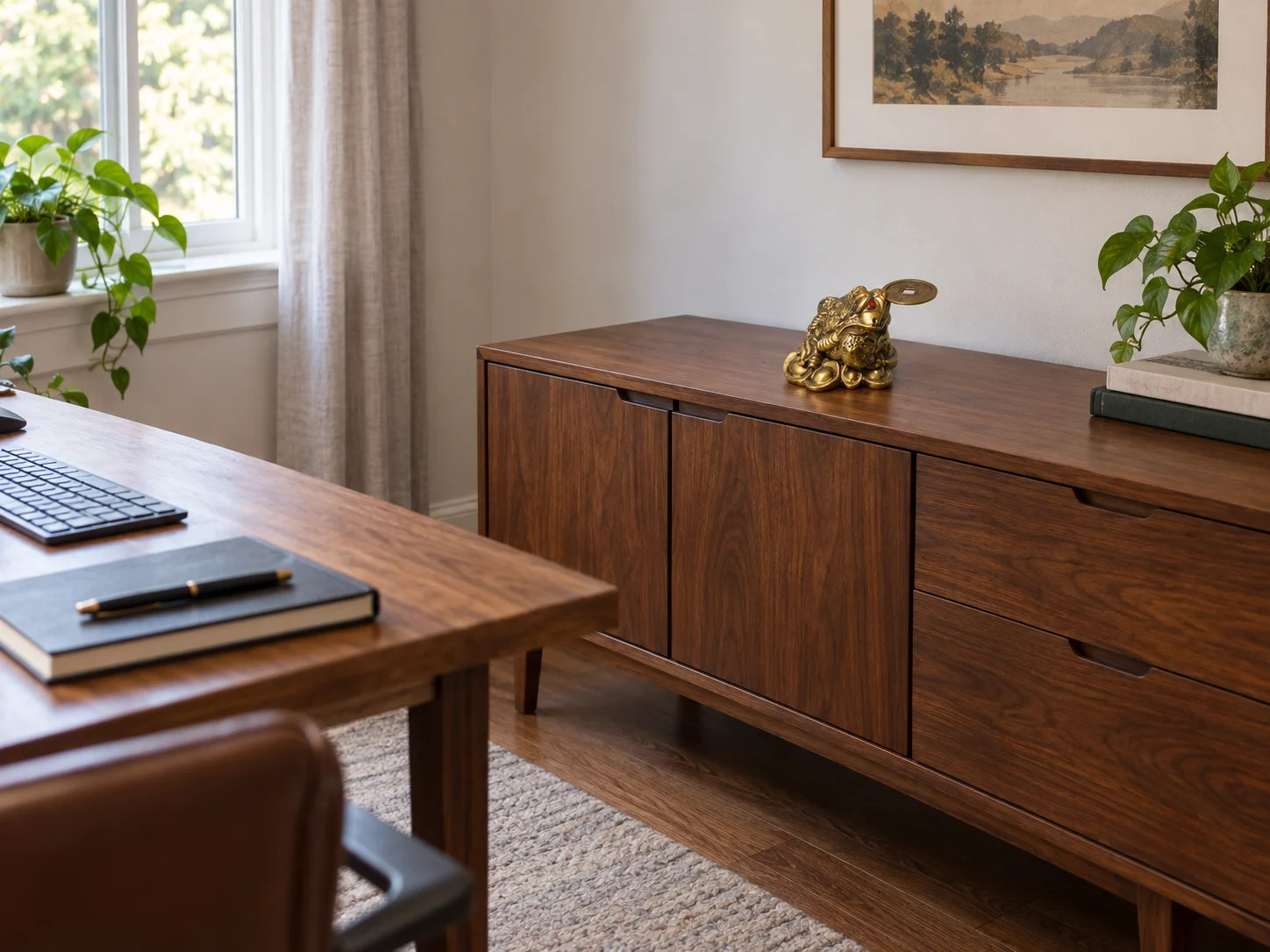
In an office, a side cabinet is often a calmer setting than the main work surface. It gives the ornament a place without making you move it whenever you open a notebook, charge a device or clear the desk.
If the desk is the only available surface, try the actual figure's footprint before adding it. If you keep nudging it aside, the room is telling you to choose somewhere else. Our office items guide covers the equipment and storage that need priority.
When there is no suitable entrance surface
The front door is not compulsory. A narrow foyer without a shelf does not need an extra stand just for the frog. Use a living-room bookcase, an office cabinet or another meaningful display location. The symbol should fit the home you have, not make arrival more awkward.
Should It Face Into the Room or Toward the Door?
Facing the figure inward is a familiar contemporary interpretation of bringing resources into the home. Other placement advice differs, so treat it as a convention rather than a direction on which your finances depend.
If you follow a family or named practitioner's tradition, use that guidance consistently instead of rotating the figure whenever you encounter a conflicting rule. If you simply enjoy the ornament, angle it so its form is visible from your usual approach and the display looks intentional.
The photographs illustrate usable display surfaces, not an exact compass bearing or a universal ritual position. The physical checks remain the same: the object rests securely, the door opens normally and the walking route stays clear.
Recognize the Symbol Before Choosing One
The money frog is also called Jin Chan, Chan Chu or a money toad. English-language decorating advice often calls it a frog, but the distinctive figure is a three-legged toad. Modern ornaments may sit on coins and hold a cash coin at the mouth; gold, bronze and jade-like finishes are common, not compulsory.
Look at the figure from more than one angle. Its single rear leg can be obscured in a front view, and decorative coins can make the base difficult to read. An ordinary four-legged garden frog is not the same iconographic form.
The story behind the three-legged toad
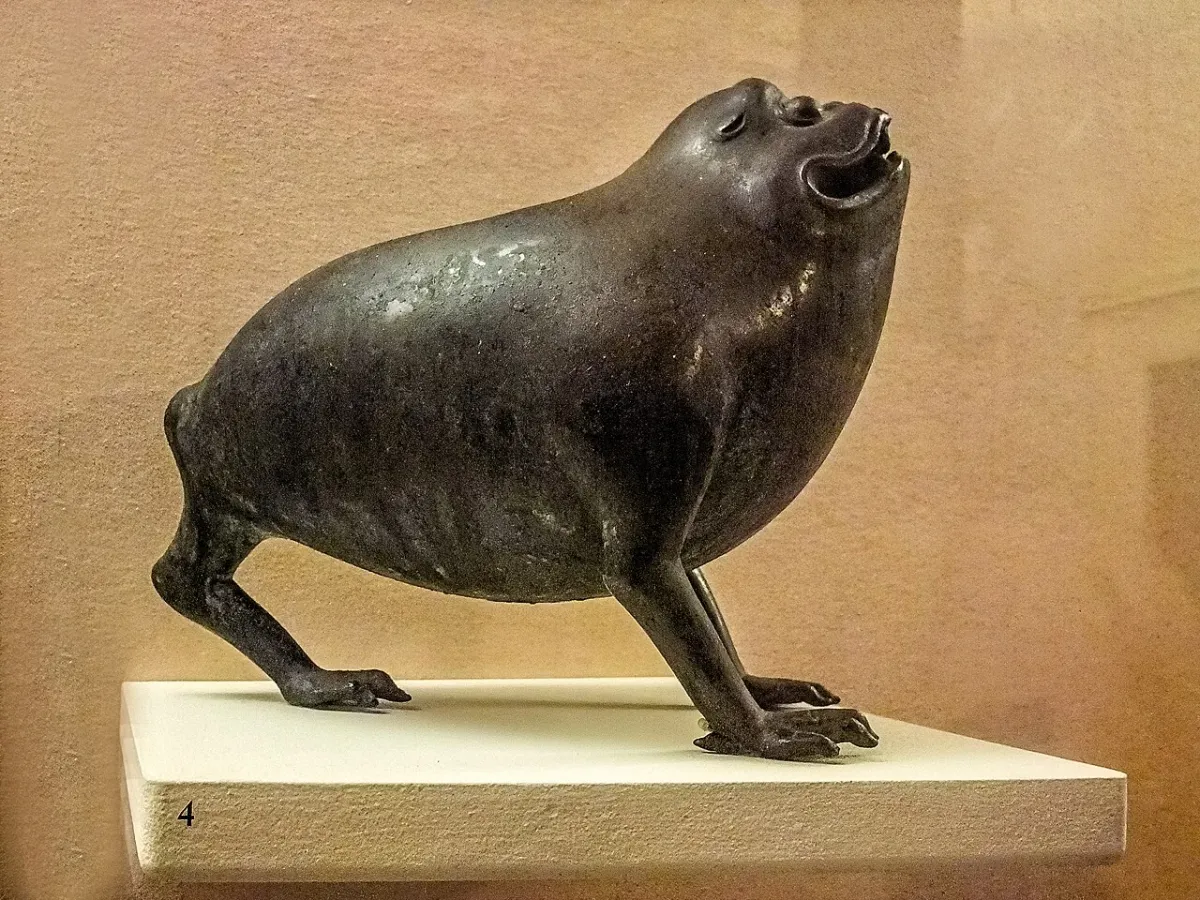

The Metropolitan Museum of Art's record for The Immortal Liu Haichan Playing with a Toad connects Liu Haichan, also called Liu Hai, with the three-legged toad in Chinese imagery. A Qing sleeve-band medallion depicts the coin-related legend. These records give the symbol cultural context; they do not prescribe where every modern ornament belongs.
What its prosperity meaning can represent
A household may use the figure to represent prosperity, stewardship or a personal financial intention. An inherited piece can also carry family meaning. None of those meanings requires treating the ornament as a mechanism that generates income, replaces budgeting or guarantees business success.
Using It in a Wealth Corner
Yes, if your chosen wealth area has a suitable display surface. First decide which mapping approach you use, since an entrance-aligned wealth area and a compass-based one are not interchangeable. The money-corner guide explains that choice.
Make the area useful and cared for before adding the figure. One ornament with space around it can be enough; there is no need to squeeze a fountain, crystals and several other symbols onto the same shelf. If the mapped corner has no safe surface, a nearby display is more practical than forcing a stand into a walking route.
The Coin Needs a Secure Place Too
Some figures have a fixed coin; others have a removable piece. If yours is removable, check how securely it fits and follow any handling instructions for that product. A prescription about which characters face upward is product- or tradition-specific, not automatically a rule for every money frog.
Keep loose coins and other small parts inaccessible to young children and pets. If a coin can fall out when the figure is bumped, choose a protected cabinet or put the loose part away. Do not depend on an exposed shelf alone to contain it.
Choose the Scale Before the Finish
A small figure can sit comfortably among ordinary furniture, while a large ornate one needs a display area that can support it visually and physically. Check width, depth, height and weight rather than judging scale from a close-up retail photograph. The paper-footprint test is useful for a bookcase as well as a console.
Choose brass, bronze, ceramic, stone or resin for its appearance, durability and personal meaning, not because a more expensive material promises more prosperity. Do not assume a green decorative figure is genuine jade. For an antique, inherited or valuable piece, follow material-appropriate care advice rather than using polish or water indiscriminately.
Rituals Are a Personal Choice
You do not need an activation ritual to appreciate or display the object. Red ribbons, particular dates or other practices belong to specific beliefs and practitioner traditions. If you follow one, use a source within that tradition rather than combining instructions from unrelated search snippets.
Let each symbol keep its own meaning
The symbols guide explains other motifs without treating them as interchangeable prosperity objects. If you want a broader arrangement, the items for wealth guide is the next step. You do not need a second or third symbol just to make this one complete.
Live With the Display Before Adding More
Try the chosen spot through a normal day. Open the door, use the key tray, sit at the desk and clean the shelf. If the figure gets in the way, move it. When its meaning feels right and the room still works, the display is finished.