



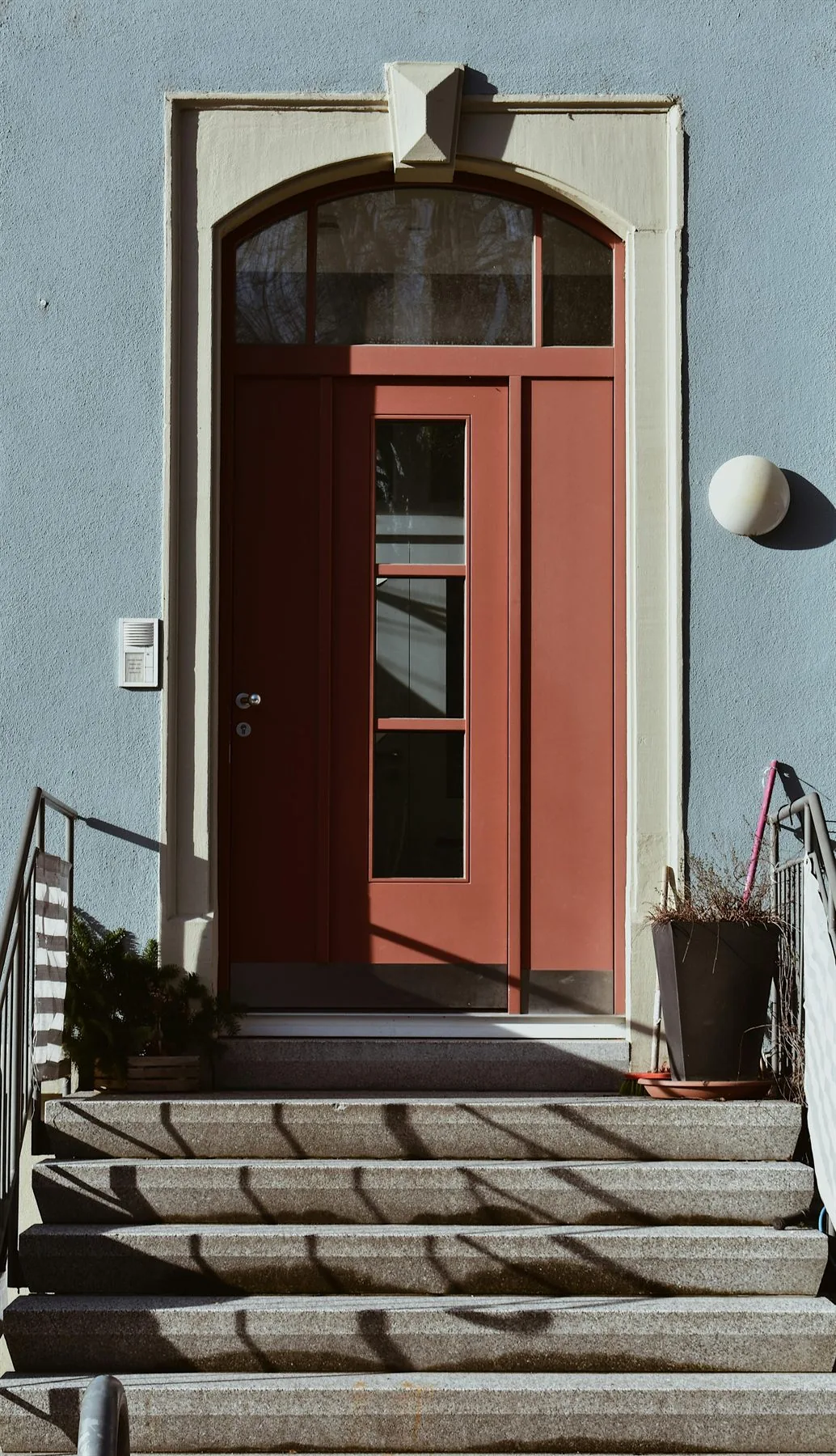
Quick Answer
The most effective feng shui front door fixes are practical ones: make sure the path is clear, the door opens smoothly, the hardware feels solid, the lighting is good, and the color looks intentional from the street. After that, add only a few welcoming details instead of cluttering the entry.
The smartest feng shui front door advice starts with function, not symbolism. When the entry feels off, the biggest improvements often come from fixing what is visible and usable first. The same approach runs through the core feng shui rules too: handle friction first, then layer in decor. If the entry opens into a planted yard or longer outdoor approach, feng shui for garden spaces is the natural companion.
The front door is the transition point between outside and inside. When that transition feels cared for, the whole home tends to feel more settled. When it feels blocked, broken, dim, or neglected, the home often feels harder to arrive in mentally as well as physically. If the house gets stronger directional sun and exposure at the threshold, feng shui for a south facing house is the natural companion article. If the inside landing zone is the bigger problem, feng shui entryway is the better follow-up.
What People Actually Notice First at a Front Door
If the entry feels off, the cause is often visible within a few seconds. It is rarely because a special item is missing. More often the door is hard to read, hard to reach, or hard to use.
| What to check | Why it matters | Best practical fix |
|---|---|---|
| Path to the door | A cluttered or awkward approach makes the home feel less welcoming before anyone arrives. | Sweep, trim, simplify, and make the route easy to read from the street. |
| Door movement | Sticking hinges, swollen paint, and awkward locks create constant friction. | Make the door open and close smoothly with hardware that feels reliable in the hand. |
| Night visibility | A dark threshold feels uncertain and neglected even if the rest of the house is fine. | Add warm lighting that makes the step, handle, and house number easy to see. |
| Color presence | The door should read like a chosen focal point, not disappear into the wall. | Choose a shade that suits the facade and looks intentional at a distance. |
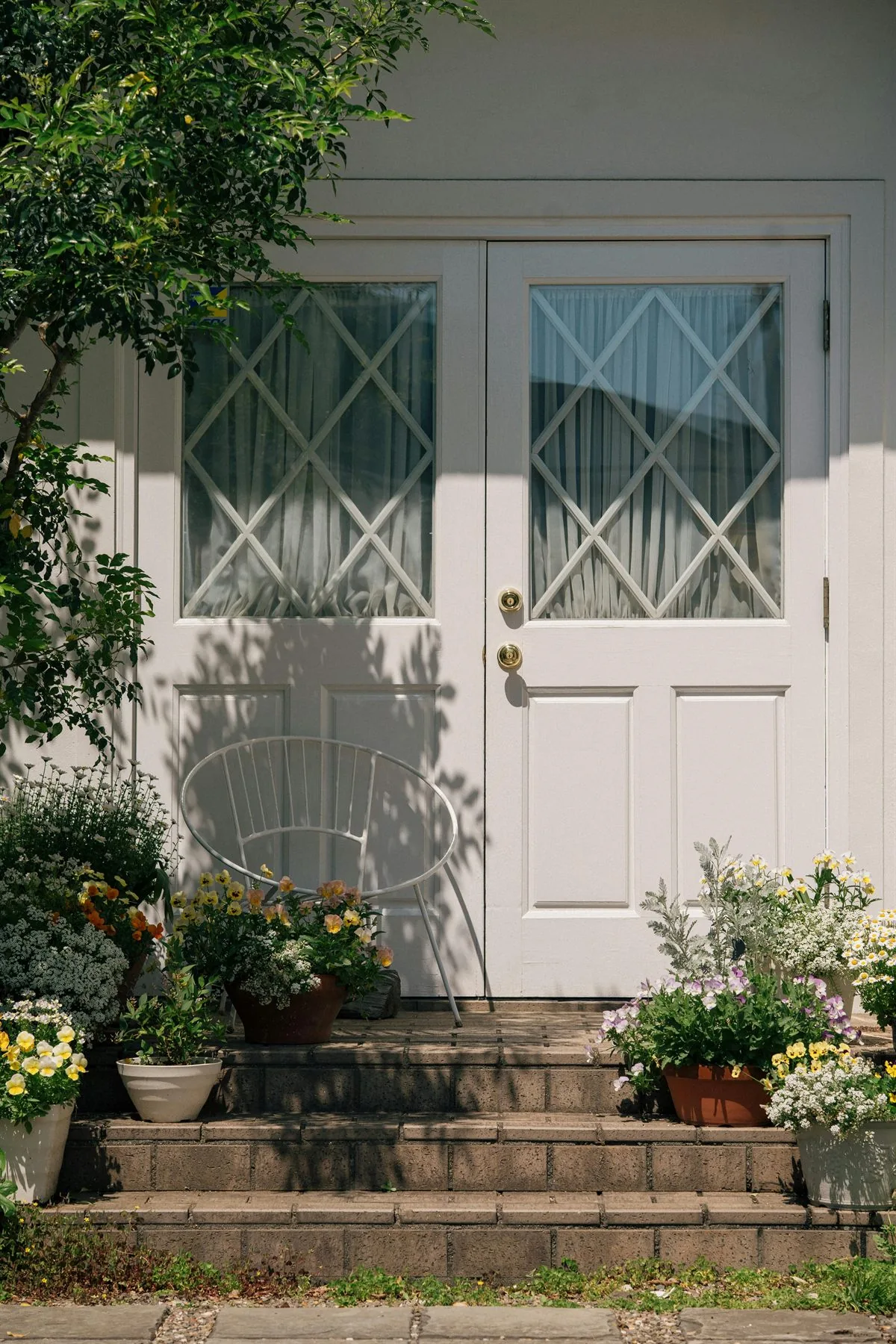
| Styling around the door | Dead planters, a tiny mat, or random storage make the threshold feel weak. | Keep only a few clean, proportionate details around the entrance. |
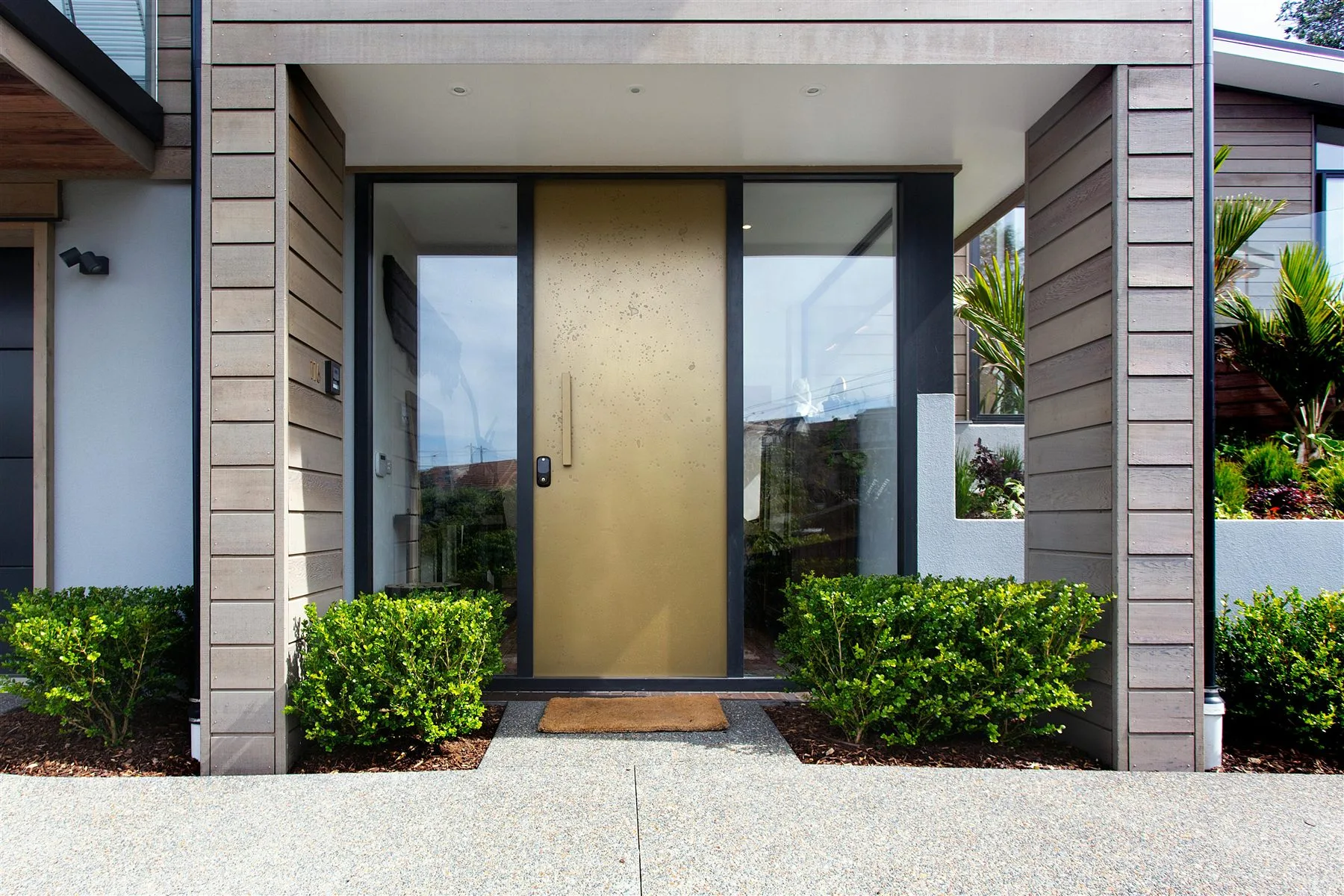
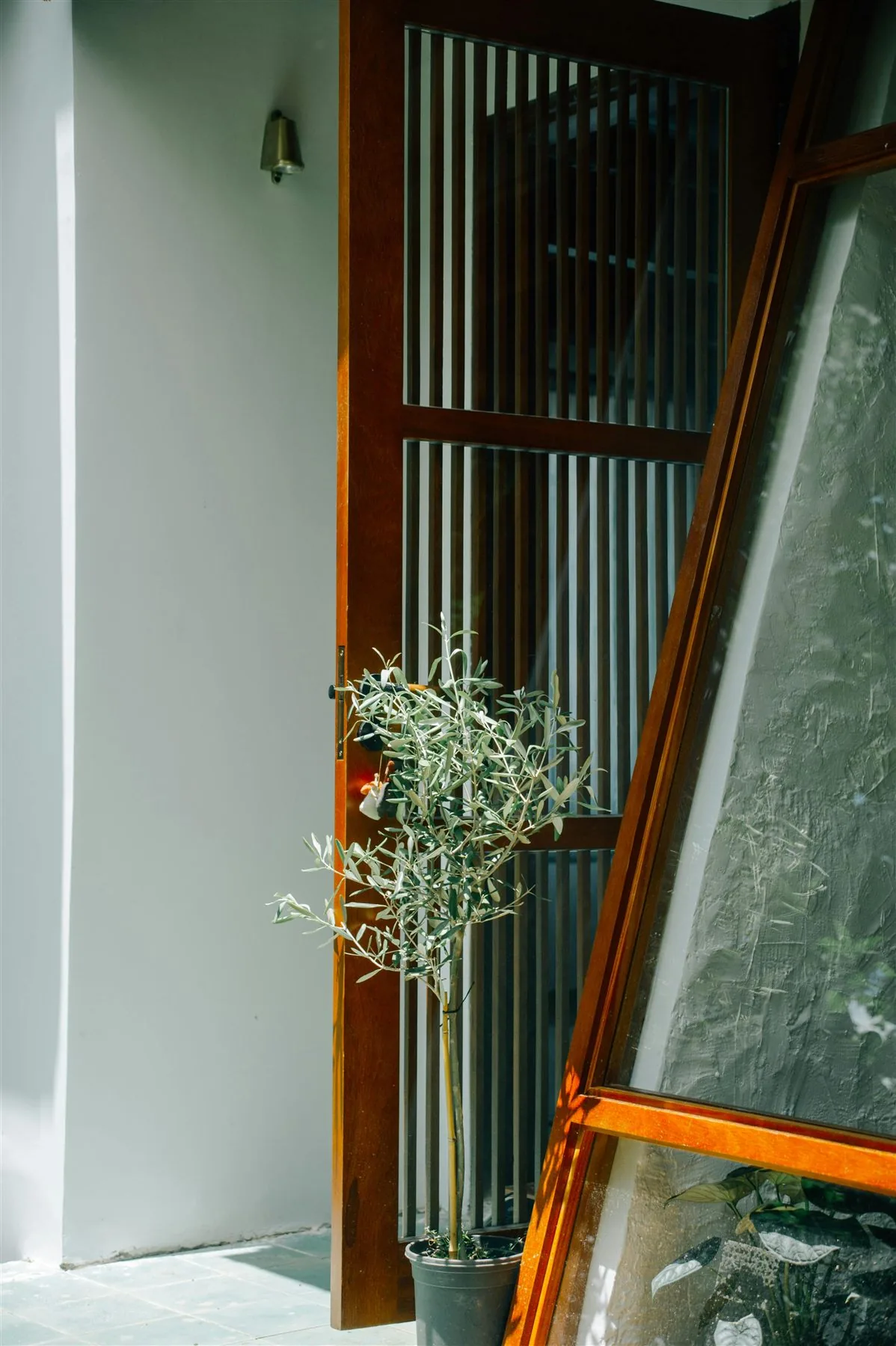
Give the entry this feeling
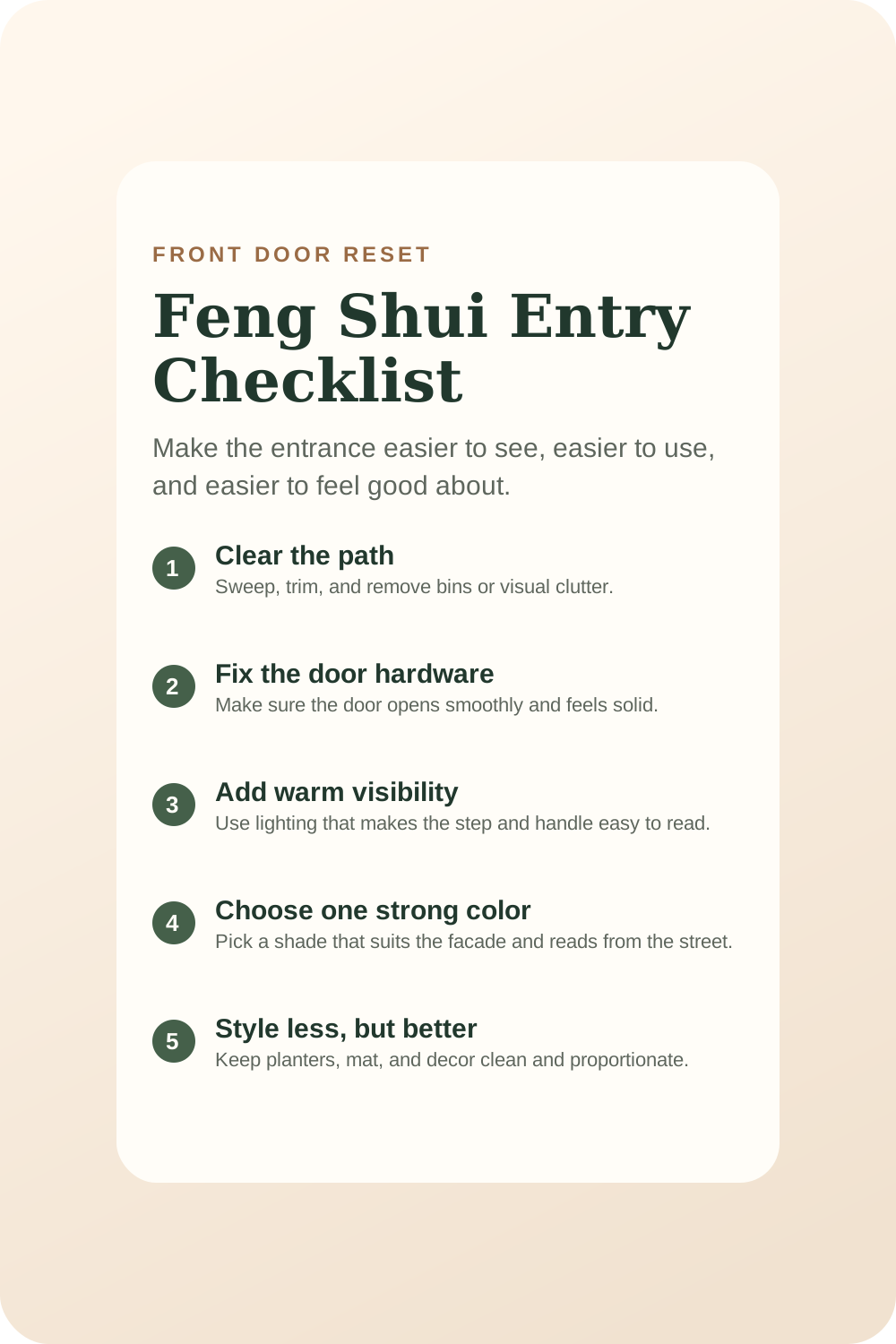
- +A clear visual line from the street or walkway to the door.
- +Warm light that makes the threshold easy to see in the evening.
- +One or two intentional decorative touches, not a crowded collection.
- +A doormat and hardware that feel proportionate to the house.
What weakens the entry
- -Broken house numbers, rusted hardware, or a hard-to-use lock.
- -Packages, shoes, bins, or random storage gathering around the door.
- -Dead planters, dirty glass, or a mat that looks worn out.
- -A front step that feels visually forgotten after dark.
Front Door Color Choices That Feel Grounded
Color questions come up because people want a shortcut. The truth is that the best feng shui front door color is not about memorizing one lucky shade. It is about making the entrance feel strong, visible, and in harmony with the house around it.
| Color direction | Works well for | Overall feeling |
|---|---|---|
| Earthy red or terracotta | Homes that need warmth and stronger visual presence | Inviting, lively, grounded |
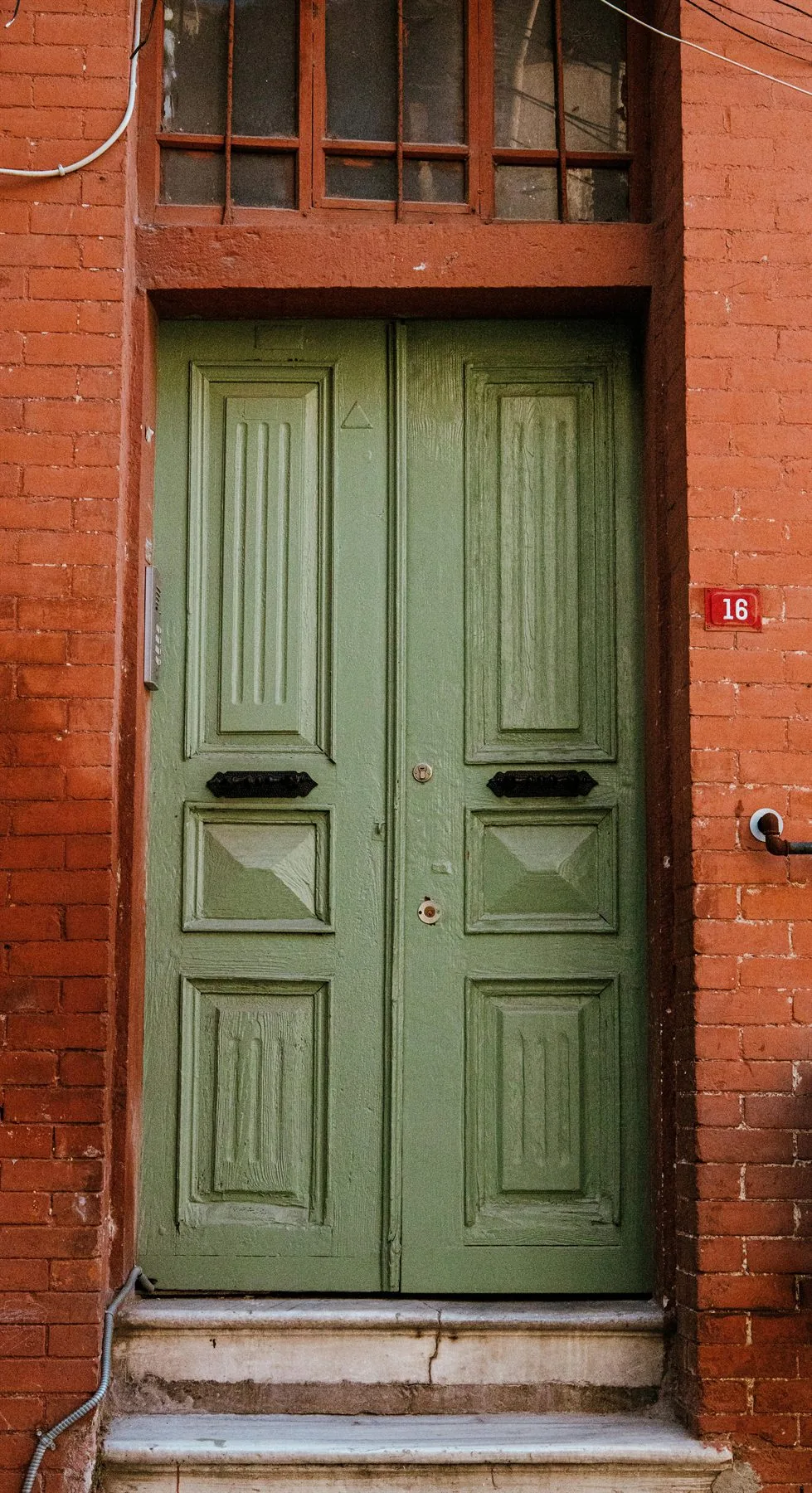
| Deep green | Garden-heavy exteriors, brick facades, and homes that suit a natural finish | Growth, steadiness, sophistication |
| Charcoal or near-black | Modern facades with good natural light and clean architectural lines | Structured, crisp, substantial |
| Warm wood or tan | Homes that need softness instead of high contrast | Natural, welcoming, balanced |
| Muted olive or bronze tone | Stone, taupe, cream, or brick exteriors that already feel earthy | Grounded, elegant, calm |
Choose color in context
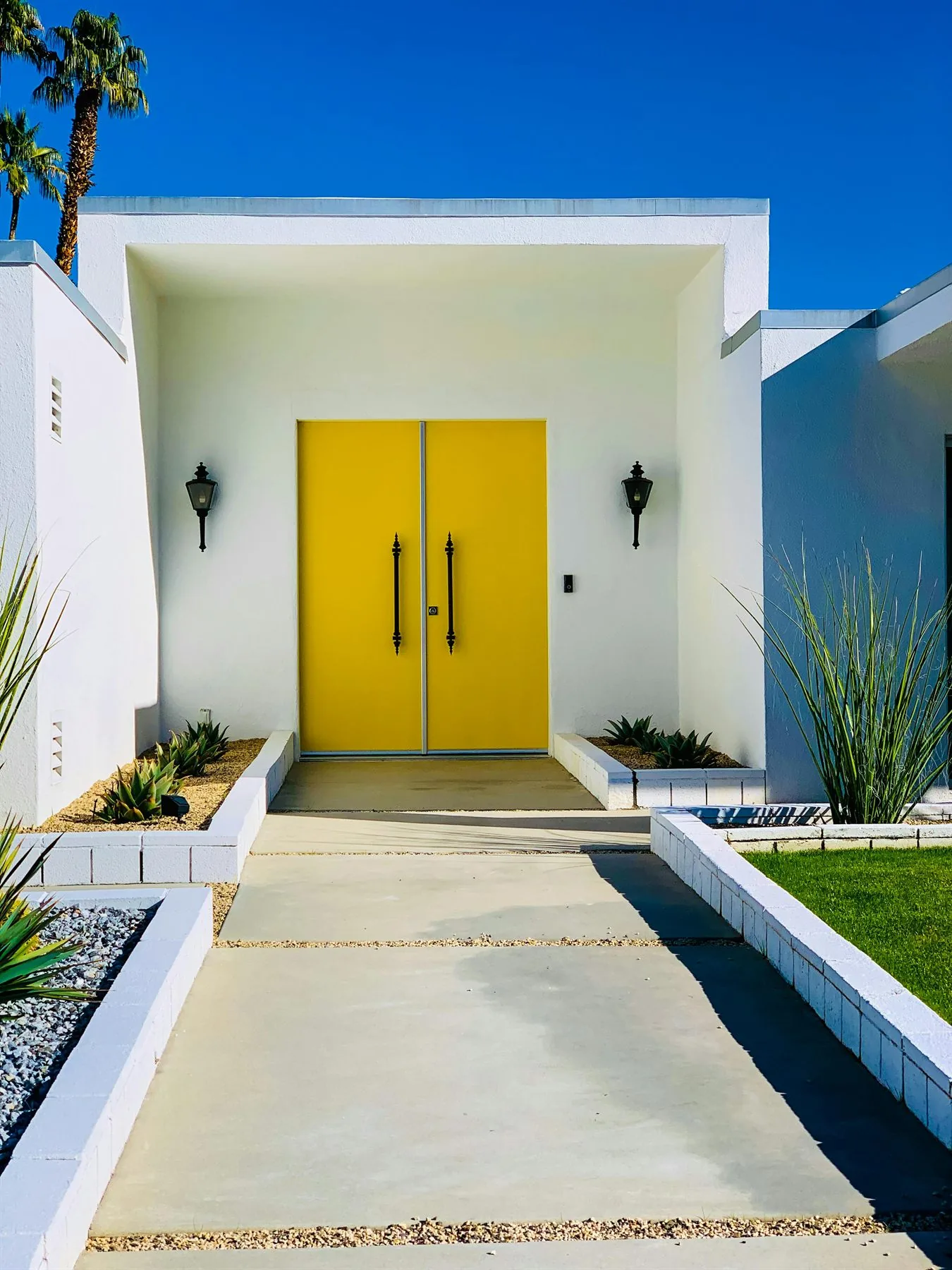
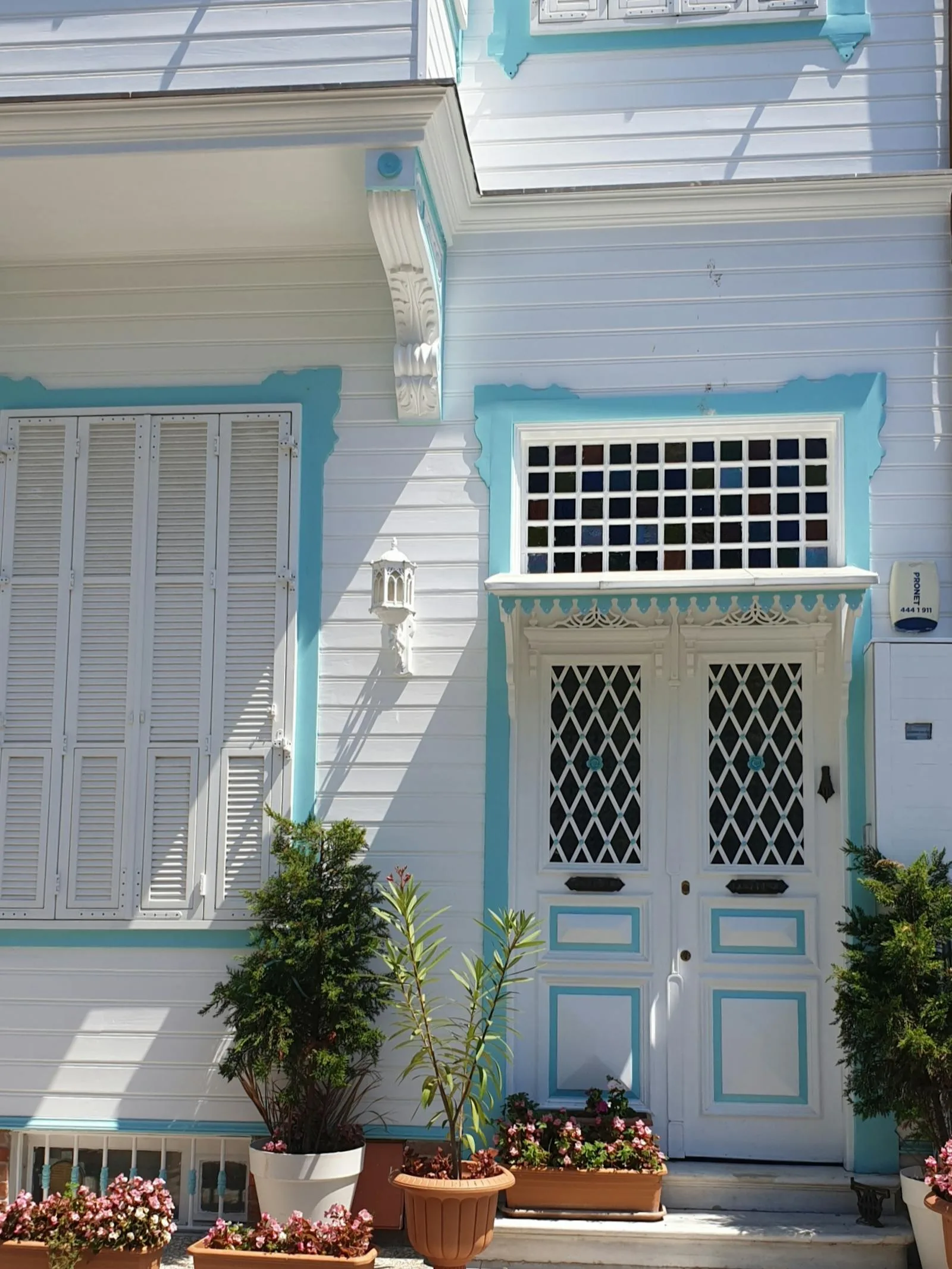
Stand across the street and look at the whole facade, not just the paint chip. The best front door color is the one that makes the entrance easier to identify and more welcoming in the full exterior composition.
Common Feng Shui Front Door Mistakes
One of the biggest mistakes is trying to fix the front door with decorative symbols while the basics are still weak. A clogged path, bad lighting, and chipped paint create more drag than the lack of any special item ever will.
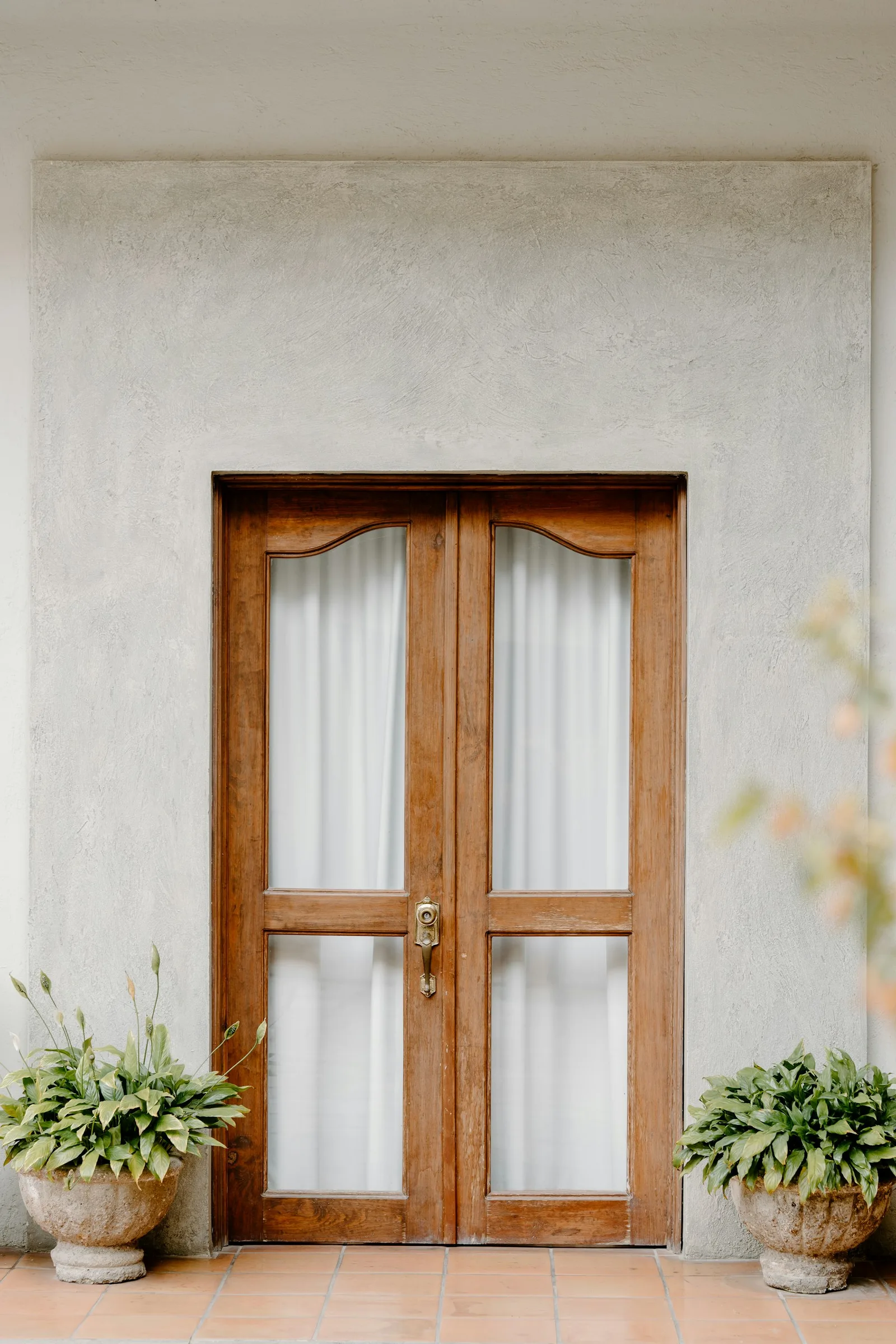
Another mistake is overdecorating the entry so much that it becomes visually noisy. The front door should feel welcoming, not crowded. A clean threshold with strong function reads better than a long list of symbolic objects.
| Front-door concern | What it can feel like | Simple fix |
|---|---|---|
| Mirror facing the door | The entry can feel visually abrupt or reflective before the home feels settled. | Move the mirror to a side wall, or soften the landing zone with art, light, or a console. |
| Stairs directly ahead | The eye rushes upward instead of letting the entry feel like a pause. | Use a runner, warm light, art, or a grounded table to slow the first impression. |
| Door hidden from the street | Guests may feel uncertain about where to arrive. | Improve numbers, lighting, path edges, and planting so the entrance reads clearly. |
| Shoes or bins at the threshold | The door starts to feel like storage instead of welcome. | Move overflow inside a closed cabinet, bench, or side-zone away from the swing path. |
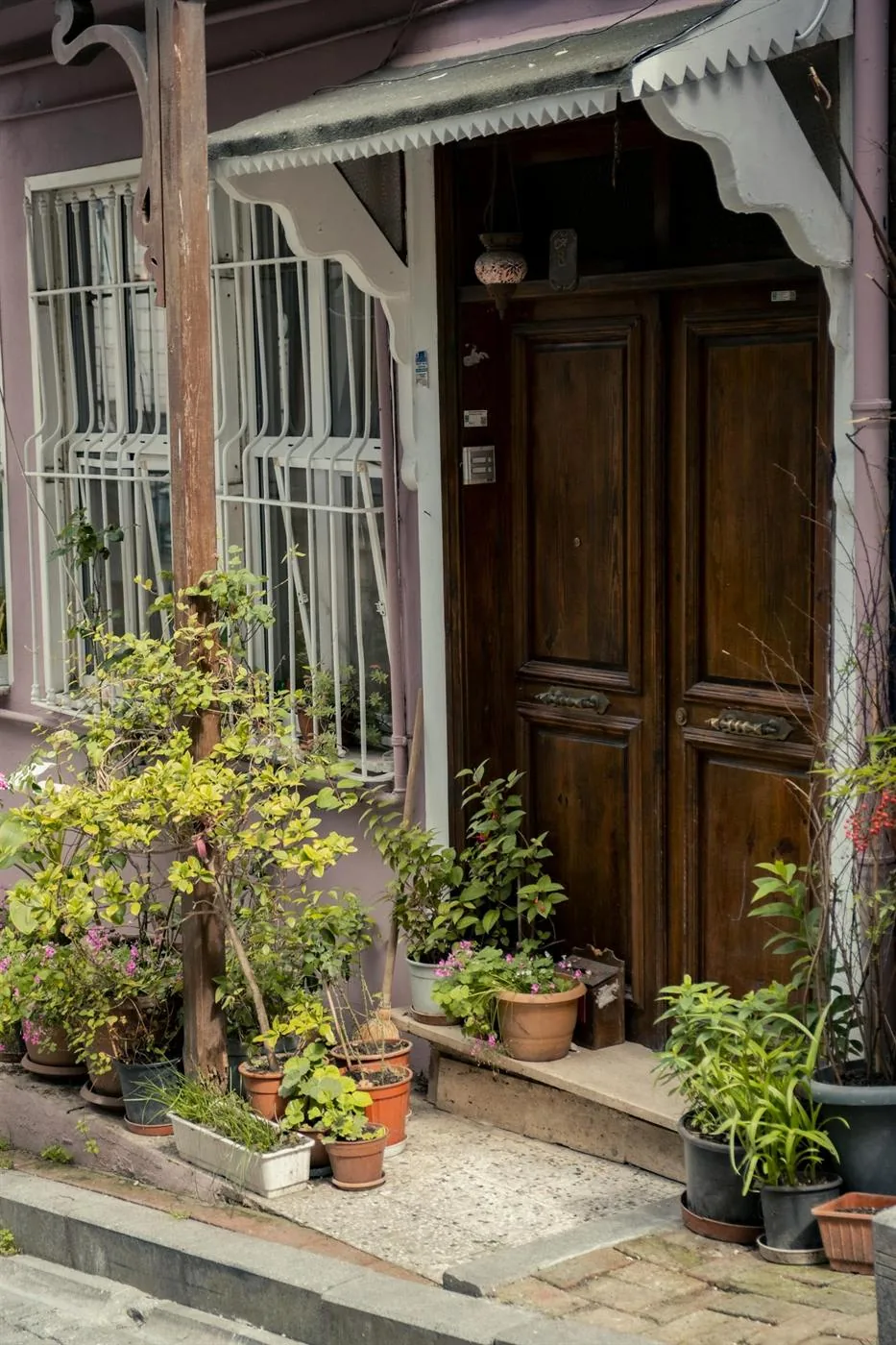
Fix the fundamentals first
If your front door area is blocked, dirty, hard to open, or poorly lit, handle those issues before buying anything new. Strong feng shui looks more like good maintenance than complicated ritual.
Frequently Asked Questions
Why is the front door important in feng shui?
What color is best for a feng shui front door?
Should a front door be clutter free in feng shui?
What should not be in front of the front door?
The Bottom Line
The strongest feng shui front door is not the most decorated one. It is the one that feels visible, cared for, easy to approach, and easy to open.
Start with function, then add color and a few welcoming details. When the entrance feels clear and intentional, the whole home tends to feel better organized and more inviting.