

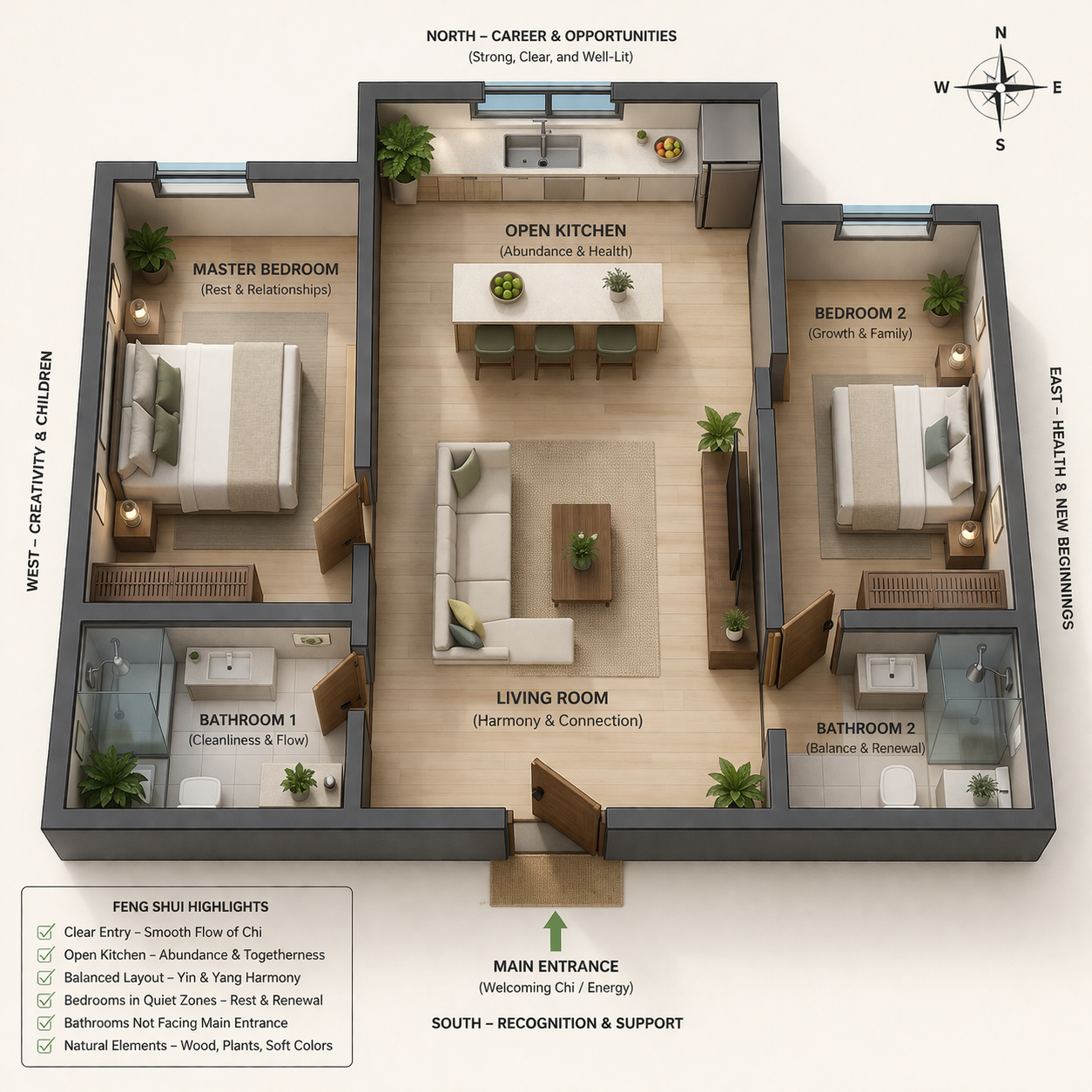
Quick Answer
A good feng shui floor plan usually has a readable entry, clear circulation, a protected bed zone, a grounded living area, and rooms that each feel like they know their job. The point is not a perfect drawing. It is a home that feels easier to move through and settle into.
Floor plans affect feng shui before the decor even arrives. The first question is usually whether the home feels legible the moment you enter.
In practical terms, a better floor plan is one where movement feels obvious, the bed and sofa feel protected enough, and the rooms do not constantly interrupt each other. That is why the plan often matters more than the small decorative cures people add later.
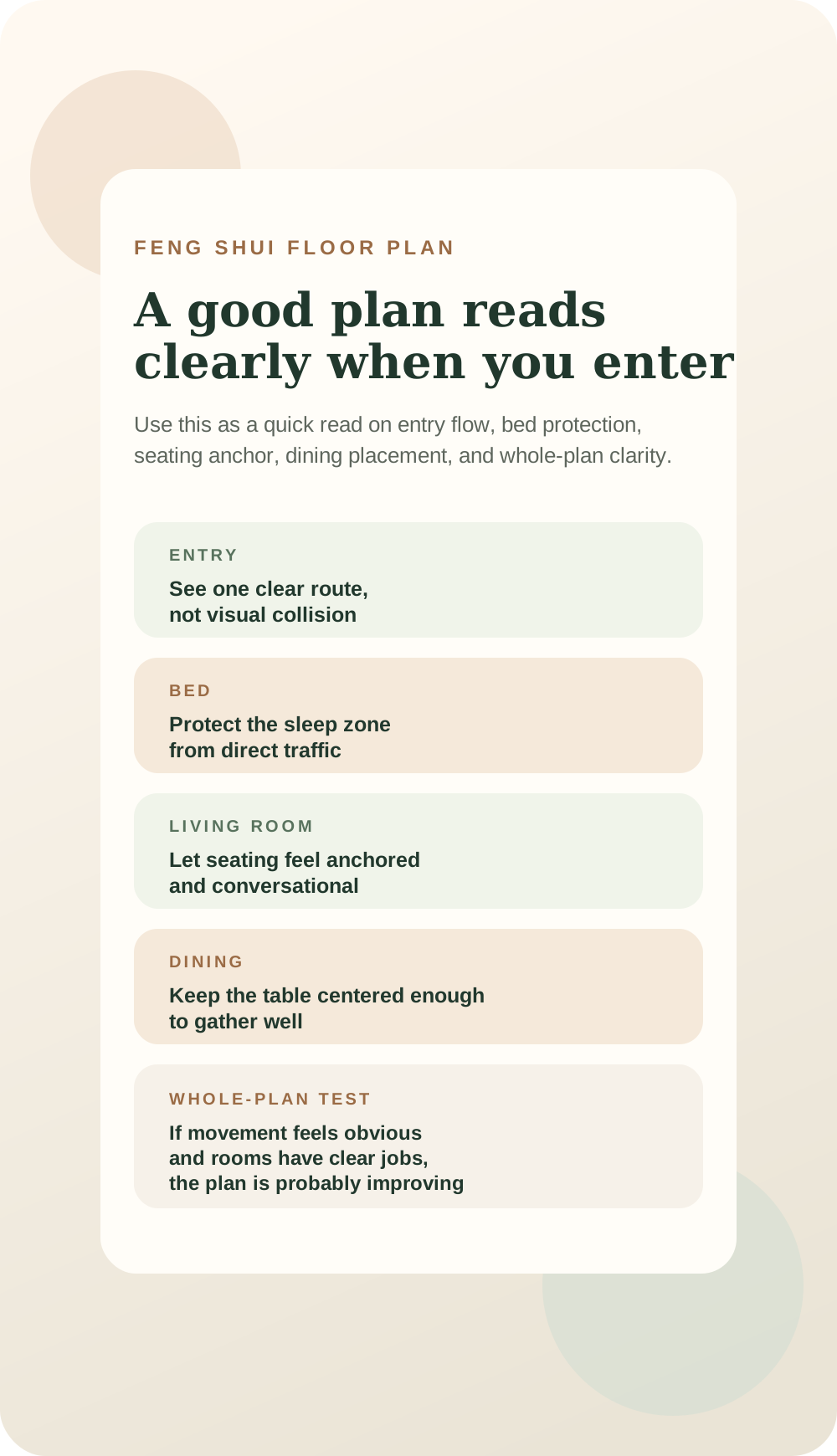
What Makes a Floor Plan Feel Better
| Plan element | What it should do | Why it matters |
|---|---|---|
| Entry | Offer one clear route into the home | The house feels calmer when arrival is readable instead of abrupt. |
| Bedroom | Protect the bed from direct traffic pressure | Sleep improves when the bed does not feel exposed to the whole house. |
| Living area | Anchor seating and conversation | The room feels more stable and more socially comfortable. |
| Dining zone | Hold the table clearly enough to gather | Nourishment spaces weaken when they feel like leftovers in circulation paths. |
| Circulation | Stay obvious without slicing through every zone | Movement is easier when rooms are connected without collapsing into each other. |

How a Good Feng Shui Plan Usually Reads
Five signs the plan is doing its job
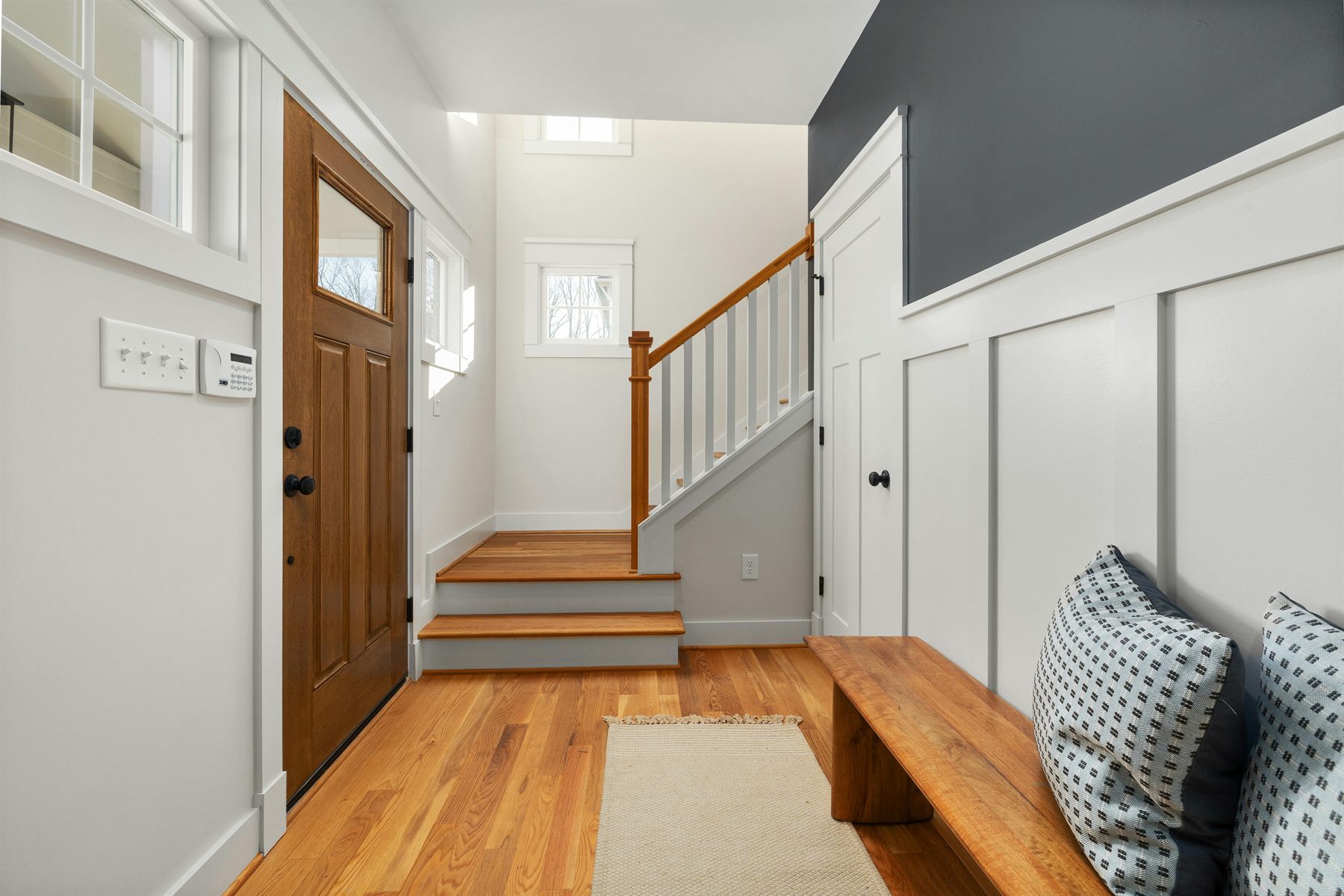
The entry does not collide with everything at once
You can enter, orient yourself, and move naturally instead of being visually hit by many functions at the same time.
The bed is protected enough
The bed has the strongest available wall and is not sitting in the middle of the home's main traffic pressure.
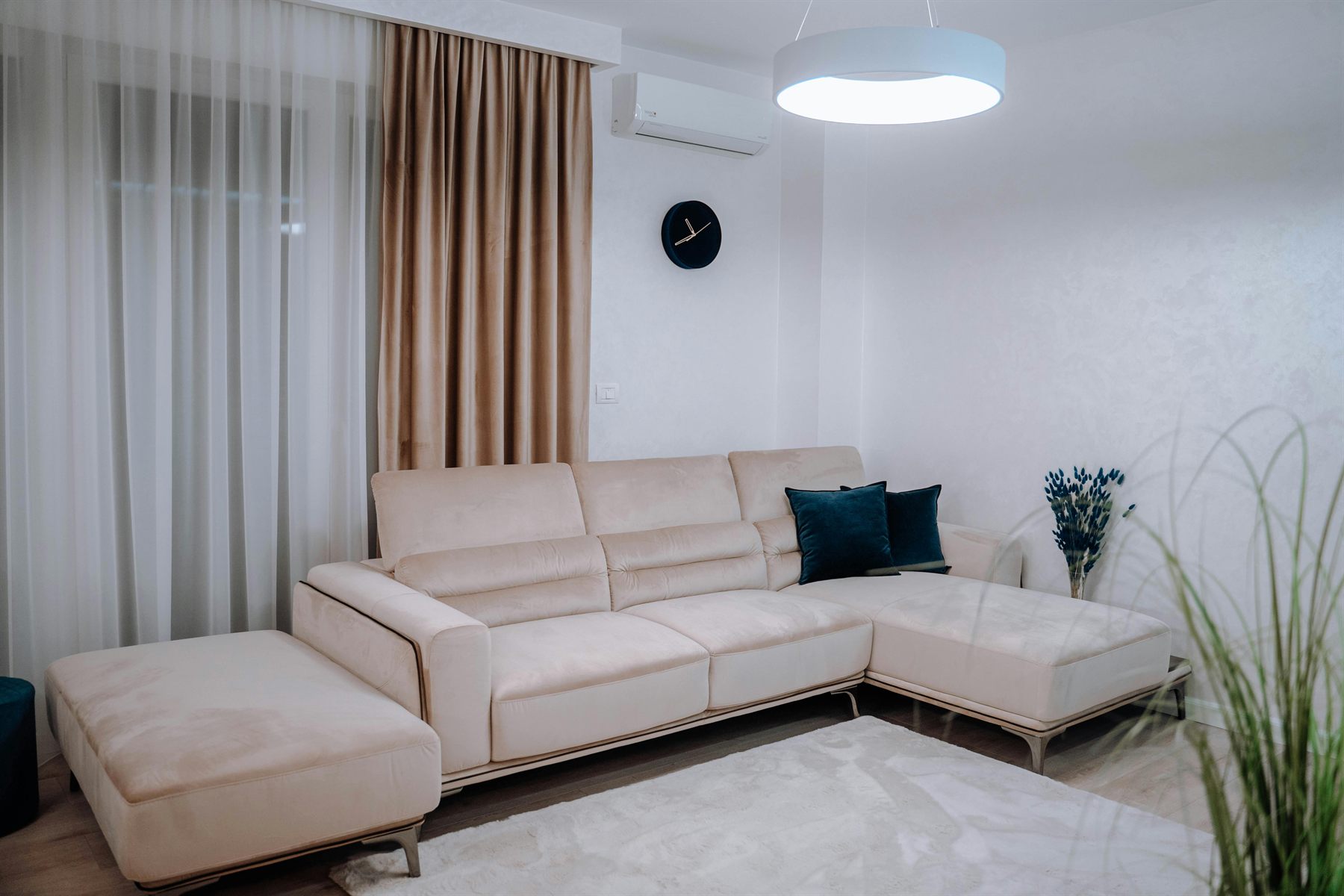
The living room has a real anchor
The sofa or main seating group holds the room instead of floating inside circulation.
The dining area still feels intentional
The table can be used as a gathering zone without becoming only another obstacle in the plan.
Rooms have clear jobs
The home feels more restful when each main zone knows its purpose and does not visually merge with every other zone.


Compact Floor Plans Can Still Have Good Feng Shui
A smaller apartment does not need the same layout ideals as a larger home. What matters more is that sleep, seating, cooking, and bath functions are readable enough that the home does not feel like one constant collision. In compact plans, clarity usually beats symmetry.
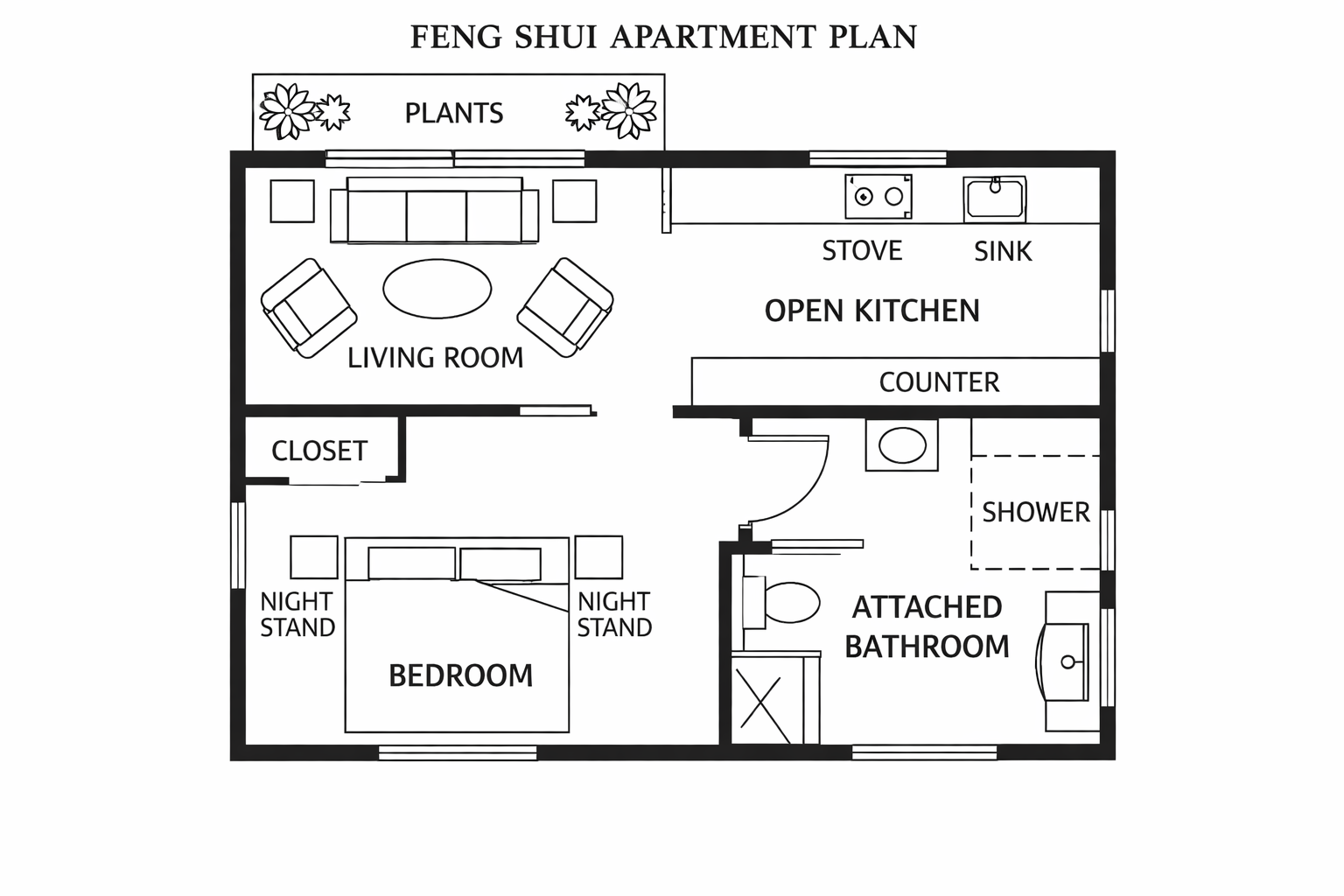
In a compact apartment like this, the main priorities are usually bed protection, a clearer entry drop zone, and enough separation between the living room and kitchen that the home still feels settled. If you are working with an even tighter studio setup, feng shui one room apartment goes deeper into how to visually separate shared zones.
What to Fix First in an Awkward Floor Plan
Fix these first
- +Clarify the entry and first circulation path.
- +Protect the bed and living-room anchor positions.
- +Reduce furniture that blocks obvious movement.
- +Give mixed-use zones clearer visual boundaries.
Do not start here
- -Buying decor before the circulation problems are solved.
- -Treating every room equally when the bedroom and entry are still weak.
- -Adding more furniture to define zones when fewer pieces would define them better.
- -Trying to force perfect symmetry where the plan needs clearer hierarchy instead.
For room-level fixes after the bigger plan is clear, the best next reads are feng shui bed placement ideas, feng shui living room furniture, feng shui dining room, and feng shui one room apartment if the home is especially compact.
Think readability before beauty
If the home is easier to understand and move through, the feng shui is often already improving even before the styling becomes beautiful.
Frequently Asked Questions
What is a good feng shui floor plan?
What weakens a feng shui floor plan?
Can an awkward floor plan still have good feng shui?
Where should I start fixing a floor plan?
The Bottom Line
A good feng shui floor plan usually feels readable the moment you enter. The entry is clear, the bed is protected, the living area is anchored, and the main rooms know their job.
If the home feels confusing or restless, fix the hierarchy first. Clearer flow and stronger room roles often improve the whole plan faster than decorating ever will.